


Extending Tank Life and Heat Performance Outdoors
Chilly evenings around an outdoor kitchen, camper, or patio station end abruptly when a water heating tank develops leaks or unpleasant odors. Mineral-heavy water attacks tank walls relentlessly, especially in exterior setups exposed to shifting weather. Selecting the best outdoor heater for replacement anode hardware shields your tank from galvanic corrosion before metal deterioration causes irreversible damage. Whether you pick a powered titanium rod or a flexible sacrificial core, matching the anode to your system preserves warmth across your outdoor space. Pairing tank care with a dependable best core heater 110v setup keeps your utility zones running smoothly.
Standard tank maintenance often gets neglected until sulfur smells or rusty runoff ruin a comfortable outdoor evening. Sacrificial magnesium rods dissolve naturally to protect steel tanks, while powered titanium options use low-voltage currents to eliminate sulfur-producing bacteria without decaying. Swapping an expired anode takes basic tools, yet it prevents premature tank failure. For compact utility closets adjacent to a patio, balancing tank durability with a best compact indoor heater helps maintain consistent thermal comfort across every zone of your property.
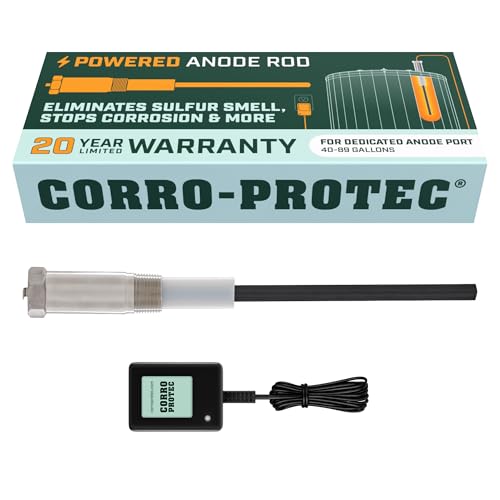
Pros
- Permanent titanium construction eliminates the routine replacement required by sacrificial magnesium or aluminum rods
- Certified lead-free with the Water Quality Association Gold Seal for drinking water safety
- Generous 12-foot power cord allows flexible connection to standard electrical outlets
- Listed 20-year manufacturer warranty offers long-term coverage for residential tanks
Cons
- Not an automotive heater core and cannot resolve vehicle heating, defroster, or coolant-leak problems
- Incompatible with standard Bradford White water heaters without a separately purchased hot water outlet adapter kit
- Requires a nearby continuous electrical outlet to function
This Corro-Protec product is an electrical powered anode rod built for residential and commercial tank water heaters, not an automotive heater core. If you arrived here while troubleshooting vehicle heating problems such as weak cabin warmth, coolant odor, or damp front carpets, this component is a category mismatch. It is built strictly for domestic plumbing tanks ranging from 40 to 89 gallons to defend steel tank walls against electrochemical corrosion and neutralize hot water odors.
Based on the manufacturer specifications, the unit features a titanium mixed-metal oxide active rod certified lead-free with the Water Quality Association Gold Seal. The package measures 16 by 4 by 4 inches, weighs under a pound, and includes a 12-foot electrical power cord along with step-by-step instructions. It installs into the dedicated hex-head anode port found on top of most electric, gas, solar, hybrid, and geothermal tanks. The listing specifies that standard Bradford White models require a different outlet-mounted version rather than this dedicated port model.
In a car or truck, an automotive heater core operates on entirely different principles. A vehicle heater core is a compact liquid-to-air heat exchanger located inside the dashboard HVAC box. Hot engine coolant circulates through its internal passages, and cabin blower air passes over exterior fins to warm the passenger compartment. When drivers experience a sweet coolant odor inside the car, greasy fog on the windshield, or cold vent discharge, these symptoms often point toward automotive cooling system troubles like a clogged core, blend-door malfunction, low coolant level, or an internal core leak. This plumbing anode rod plays no role in automotive coolant circulation or passenger heating.
For automotive owners, DIY mechanics, and parts buyers, verifying part identity is a critical first step before ordering any replacement. Automotive repairs require matching the exact vehicle year, make, model, engine size, and heater core connection tube geometry. Attempting to fit a residential plumbing rod into an automotive cooling system is impossible and will not address vehicle heating failures. Technicians diagnosing a vehicle must verify whether symptoms stem from a thermostat, water pump, airlock, or the heater core itself before purchasing automotive parts.
From a plumbing standpoint, this product has specific limitations that buyers should keep in mind. It requires an active electrical outlet within 12 feet of the water heater tank and will not operate during extended power outages. It also requires specialized large sockets, specifically 1-1/16-inch and 1-3/16-inch sizes, to remove the old factory rod and seat the new hex head. Furthermore, an anode rod provides preventive protection and odor control; it cannot seal or repair a water heater tank that is already rusted through and actively leaking.
If you are a homeowner or plumber looking to protect a 40-to-89-gallon water heater from corrosion and clear sulfur odors, the Corro-Protec powered anode rod provides solid documented specifications backed by a 20-year warranty. However, if you are a vehicle owner or technician seeking a replacement automotive heater core, do not buy this product. Instead, search vehicle-specific parts catalogs using your exact vehicle identification number and model details to find a compatible automotive heat exchanger.
This product is engineered exclusively for 40-to-89-gallon residential and commercial water heater tanks. It is compatible with electric, natural gas, propane, solar, hybrid, and geothermal tank systems that feature a standard dedicated anode port on the top of the tank.
The listing explicitly notes that this model does not fit standard Bradford White water heaters through their top port configuration. Those tanks require a specialized hot water outlet installation model. In addition, this unit has zero compatibility with cars, trucks, SUVs, or any automotive heating, ventilation, and air conditioning systems.
Symptoms like weak cabin heat, coolant smells inside the vehicle, or damp carpeting on the passenger floorboard are related to automotive cooling and HVAC systems. While these signs may suggest a blocked or leaking automotive heater core, they can also stem from a stuck engine thermostat, low coolant levels, air pockets, or broken climate control blend doors. A qualified automotive diagnosis is recommended to isolate the exact cause.
In contrast, this Corro-Protec anode rod addresses residential plumbing symptoms, specifically rotten egg or sulfur odors coming from hot water taps and rapid internal tank corrosion. It cannot be used to treat or repair any automotive heating or cooling problems.

Pros
- Neutralizes stubborn sulfur and rotten egg odors within 24 hours according to manufacturer specifications
- Universal compatibility across most 40-89 gallon electric, gas, hybrid, and solar water heater tanks
- Durable titanium construction ends the need for annual sacrificial anode rod replacements
- Functions effectively in softened water where conventional sacrificial rods deteriorate quickly
- Consumes minimal electricity at approximately 10 kWh per year
Cons
- Explicitly incompatible with Bradford White brand water heaters
- Requires access to a standard electrical outlet near the water heater location
- Restricted to 40-89 gallon tanks and does not suit tankless water heating systems
The HertzEagle Powered Anode Rod is an active electronic replacement component designed for 40-89 gallon residential water heaters. Homeowners dealing with persistent rotten egg or sulfur odors, particularly those on private well water or using water softening systems, will find this upgrade practical. By utilizing an energized titanium electrode instead of a conventional sacrificial magnesium or aluminum rod, it delivers continuous cathodic protection to prevent interior tank corrosion while eliminating the chemical reactions that generate unpleasant water odors.
Odor reduction and active tank protection represent the primary functional strengths of this electronic anode. Manufacturer specifications state that the titanium powered rod can eliminate sulfur smells within 24 hours of operation. Unlike traditional sacrificial rods that slowly dissolve and create loose sediment at the base of the tank, this powered system protects the water heater against all degrees of water hardness without degrading. The unit operates efficiently, consuming approximately 10 kWh per year for full-time electronic defense.
Construction quality centers on a solid titanium rod measuring 12.0 inches in length, with the full assembly weighing approximately 1.39 pounds. The exterior housing protects the electrical module that regulates protective current through the water tank. Because titanium does not break down like sacrificial zinc or aluminum alternatives, the core rod is designed to last over 20 years without requiring replacement or producing metallic residue.
Installation involves threading the 12.0-inch rod into a standard anode port on an eligible 40-89 gallon storage tank and connecting the power adapter to an available wall outlet. Product documentation highlights compatibility across gas, electric, hybrid, solar, and geothermal tanks connected to either municipal or well supplies. Because the rod maintains electrical current rather than eroding away, regular maintenance is reduced compared to traditional sacrificial rods that demand routine inspection.
Certain fit limitations require verification prior to purchase. This model is explicitly incompatible with Bradford White water heaters, which typically use a specialized anode design integrated directly into the hot water outlet. Buyers must also ensure adequate vertical clearance above their water heater tank to insert the 12.0-inch rigid rod, as well as a nearby power outlet. Storage tanks outside the 40-89 gallon range and tankless systems are not supported.
For homeowners and property managers maintaining standard 40 to 89 gallon water heaters troubled by sulfur odors or rapid rod corrosion from water softeners, the HertzEagle Powered Anode Rod provides a durable solution. Provided the tank is not made by Bradford White and a power outlet is nearby, this titanium electronic system offers long-term reliability backed by a 5-year base warranty and an available 20-year extended warranty.
The HertzEagle Powered Anode Rod is engineered specifically for 40-89 gallon storage water heaters. Compatible system types include electric, gas, solar, hybrid, and geothermal tanks operating on either municipal water or private well systems.
This unit is compatible with common residential water treatment equipment, including water softeners, whole-home filtration units, and reverse osmosis systems. It is explicitly incompatible with Bradford White brand water heaters. Verify tank capacity, brand, and vertical installation clearance before ordering.
HertzEagle provides a 5-year base warranty from the original date of purchase for this powered anode rod system. The manufacturer also highlights an available 20-year extended warranty for long-term coverage.
Review the included product manual and warranty card inside the packaging for registration guidelines, specific claim terms, and operational instructions.

Pros
- Direct-fit 3/4-inch NPT threading for Suburban and Mor-Flo 6-gallon RV water heaters
- Magnesium alloy core offers dependable sacrificial galvanic protection for steel tanks
- 9.25-inch length delivers ample protective material for multi-season tank preservation
- Simple installation and removal using a standard 1-1/16-inch socket
Cons
- Not compatible with Atwood or Dometic aluminum water heaters that use different thread sizes and materials
- Requires a 1-1/16-inch socket or wrench that may not be included in basic household toolkits
- Sacrificial design requires regular visual inspection and periodic replacement as the magnesium wears down
The ARL Outdoors Magnesium Anode Rod is a specialized replacement maintenance component designed for RV owners, travel-trailer users, and seasonal campers with Suburban or Mor-Flo 6-gallon water heaters. This sacrificial rod targets interior tank corrosion prevention, serving as a vital line of defense for steel-walled RV hot water systems that endure varying water quality across different campgrounds.
Campground water often contains naturally occurring minerals and electrolytes that can quickly attack and rust steel tanks. Magnesium acts as a sacrificial metal, drawing electrochemical corrosion to itself rather than allowing the tank walls to deteriorate. This chemical sacrifice helps maintain tank integrity, reduces harmful sediment, and prevents leaks over extended seasonal camping use.
Measuring 9.25 inches long with standard 3/4-inch NPT male threads, the rod matches factory sizing for compatible 6-gallon units. The hex top requires a standard 1-1/16-inch socket for torque and removal, facilitating secure installation into the tank drain port. ARL Outdoors utilizes solid magnesium rather than aluminum, providing proactive galvanic defense.
Installing this replacement rod typically occurs during annual de-winterizing or tank flushing routines. RV owners drain the tank, clean the drain plug threads, wrap the 3/4-inch NPT threads with plumber tape, and thread the rod into place with a 1-1/16-inch socket. Routine inspection every camping season reveals the wear rate, indicating when the rod needs replacement after significant erosion.
While this anode rod fits standard 6-gallon Suburban and Mor-Flo water heaters, it is not universal across all RV models. Atwood and Dometic water heaters feature aluminum-lined tanks that generally do not utilize sacrificial magnesium rods and feature different thread dimensions. Buyers must confirm their water heater manufacturer, tank capacity, and port thread dimensions before purchasing.
For RV owners looking for a direct-replacement anode rod to maintain a Suburban or Mor-Flo 6-gallon water heater, the ARL Outdoors magnesium rod provides dependable tank defense at a practical price. Ensuring correct thread fit and checking wear annually will help protect your camper water heating system for seasons to come.
Designed specifically for Suburban and Mor-Flo 6-gallon RV water heater tanks equipped with standard 3/4-inch NPT thread ports.
Requires a 1-1/16-inch socket for removal and tightening into the tank drain bung.
Incompatible with Atwood or Dometic RV water heaters, which feature aluminum tanks and typically utilize 1/2-inch nylon drain plugs rather than magnesium sacrificial anodes.
Inspect the condition of the sacrificial magnesium rod at least once per camping season or during annual de-winterization flushes.
Replace the rod when approximately 75 percent of the magnesium material has eroded or when the inner steel wire core becomes visibly exposed.
Always relieve tank pressure and allow the water heater to cool completely before loosening the hex head to prevent hot water burns.

Pros
- Hinged four-segment construction allows installation in low-clearance spaces above home water tanks
- Standard 3/4-inch NPT connection matches widely used residential water heater tank ports
- Constructed from magnesium to act as a sacrificial element for residential water tank protection
Cons
- Category mismatch for automotive shoppers; cannot be used in vehicle heating or engine cooling systems
- Listing does not provide specific alloy grade certifications or documented manufacturer warranty terms
- Requires verifying residential tank thread specifications and overhead clearance prior to purchase
The yrjns 44-inch flexible magnesium anode rod is a residential plumbing replacement component designed specifically for domestic storage water heater tanks. Vehicle owners, DIY mechanics, and technicians troubleshooting vehicle HVAC problems such as weak cabin heat, coolant leaks, or fogged windshields will find that this item represents a complete category mismatch. While retail catalog search queries for heating components occasionally surface residential plumbing hardware, this product is entirely unrelated to passenger car, truck, or SUV heating and cooling systems. It is intended exclusively for homeowners and maintenance personnel servicing residential hot water tanks.
Based on the supplied product specifications, this assembly consists of a 44-inch magnesium rod divided into four hinged segments, each measuring less than 12 inches in length. This collapsible configuration allows the rod to bend during installation, making it practical for utility rooms or basements with restricted overhead ceiling clearance. The top fitting features standard 3/4-inch NPT threads designed to fit a 1-1/16-inch socket. The listing indicates compatibility with major residential tank water heater brands, including Rheem, A.O. Smith, Richmond, Reliance, Kenmore, State, and GE, provided they utilize a standard 3/4-inch NPT connection port. The package contains a single replacement rod kit.
In contrast, an automotive heater core functions as a compact liquid-to-air heat exchanger positioned inside a vehicle dashboard or HVAC plenum. Hot engine coolant circulates through the core tubes while the vehicle blower fan pushes air across the exterior fins to warm the passenger cabin. Vehicle owners experiencing symptoms such as lukewarm airflow, persistent sweet coolant odors, windshield fogging, or damp passenger carpeting often suspect a failing heater core. However, these symptoms alone do not confirm heater core failure, as low coolant levels, trapped air pockets, faulty thermostats, or malfunctioning blend door actuators can produce identical heating issues.
For shoppers seeking automotive repair components, practical purchasing requires strictly verifying vehicle-specific details before placing an order. Vehicle heater cores demand exact alignment with vehicle year, make, model, engine size, trim level, and inlet-outlet tube geometry. Attempting to adapt plumbing fixtures or sacrificial anode rods into an automotive cooling loop is neither viable nor safe. For home plumbing buyers, practical considerations involve confirming that the water heater tank uses a 3/4-inch NPT opening and ensuring that appropriate tools, such as a heavy-duty 1-1/16-inch socket and breaker bar, are available to remove the old factory rod.
The product listing presents notable limitations for automotive and plumbing buyers alike. Automotive technicians and parts shoppers should disregard this listing entirely for automotive applications. For plumbing maintenance, the listing provides general dimensional claims but does not provide specific alloy certifications, chemical composition sheets, or documented manufacturer warranty periods. The manufacturer also recommends inspecting and replacing anode rods every two years, though actual rod depletion rates depend heavily on local water hardness, operating temperatures, and household water usage patterns.
A practical buying recommendation depends entirely on the intended application. Homeowners seeking a flexible sacrificial magnesium rod to service a residential water heater in a low-ceiling space may find the segmented design useful, provided they verify connection sizing beforehand. Conversely, automotive owners, DIY mechanics, and automotive parts shoppers should avoid ordering this part for automotive heating repairs and instead select a dedicated automotive heater core cataloged for their vehicle's exact make, model, and engine configuration.
This product is an anode rod for a stationary residential tank water heater, not an automotive heater core. An automotive heater core is an internal component of a vehicle heating, ventilation, and air conditioning system that transfers heat from circulating engine coolant to the passenger cabin. A sacrificial anode rod serves a completely different electrochemical purpose inside a residential plumbing appliance by corroding in place of the steel tank lining.
Automotive parts buyers should not purchase this component to address vehicle cabin heat problems, engine coolant leaks, or HVAC system malfunctions. Automotive cooling systems operate on pressurized liquid coolant mixes and require vehicle-matched heat exchangers, whereas this part is designed solely for domestic potable water storage tanks.
The listed specifications state that this product measures 44 inches in total length and is constructed from magnesium. The rod is divided into four distinct hinged segments, each under 12 inches long, which allows it to flex into tight ceiling spaces during home installation without requiring the water heater tank to be disconnected or tilted.
Connection threading is specified as standard 3/4-inch NPT and is sized for installation or removal using a 1-1/16-inch socket. The product data lists compatibility with standard residential tank water heaters from manufacturers including A.O. Smith, Rheem, Reliance, Richmond, Kenmore, State, and GE that share this 3/4-inch NPT connection layout.

Pros
- Flexible four-section segmented design easily installs in basements and utility closets with minimal overhead clearance.
- Aluminum-zinc alloy construction provides sacrificial corrosion resistance without affecting domestic water quality.
- Compatible with most major residential water heater brands, including AO Smith, Rheem, and Whirlpool.
- Includes PTFE thread tape directly in the package for convenient installation.
Cons
- Incompatible with Bradford White water heaters due to brand-specific tank fitting configurations.
- Requires buyers to verify existing tank bung thread sizing and socket clearance before installation.
- Aluminum-zinc composition may not match the specific preferences of homeowners seeking pure magnesium rods for soft water.
The Ozek 44-Inch Segmented Aluminum Zinc Anode Rod is a sacrificial replacement component engineered for homeowners seeking to extend the operational lifespan of their residential storage water heaters. Sacrificial anode rods serve as the primary defense against rust and interior tank decay by attracting corrosive galvanic activity away from the tank steel. When overhead clearance in a basement, garage, or mechanical closet is limited, installing a traditional 44-inch rigid rod can be virtually impossible without tilting or disconnecting the entire appliance. This segmented model directly addresses that challenge by offering a folding, linked profile.
In terms of operational performance, the rod uses an aluminum-zinc alloy that sacrifices itself over time to protect the interior lining of the tank. The manufacturer notes that this alloy is safe for household water contact and will not alter domestic water quality. Aluminum-zinc formulations are frequently selected by homeowners experiencing mild sulfur odors in their hot water supply, as the zinc component helps neutralize sulfur-reducing reactions that standard magnesium rods can occasionally exacerbate in certain municipal or well water environments.
Build quality centers on four solid rod segments joined by durable stainless steel connection links. Measuring 44 inches in total length with a 0.75-inch diameter, the rod is built to standard proportions while maintaining articulation at each joint. The stainless steel connectors allow each segment to bend independently, enabling smooth insertion into the tank port section by section while maintaining electrical continuity through the entire assembly.
Installation is designed for straightforward DIY replacement where overhead space is restricted. Homeowners can feed the rod into the top anode port incrementally, bending each joint as it clears the ceiling. The package also includes PTFE thread-sealing tape to assist in achieving a leak-free seal on the hex plug threads. As with any water heater maintenance, the water supply should be turned off, pressure relieved, and the power or gas supply isolated before removing the existing anode rod.
A critical limitation is brand compatibility. The manufacturer explicitly states that this rod does not fit Bradford White water heaters, which typically use an integrated hot-water outlet anode or distinct thread dimensions. Additionally, while the rod measures 0.75 inches in diameter, buyers must verify their specific water heater model, tank depth, and hex head sizing prior to purchase to ensure a proper mechanical fit.
For homeowners maintaining brands like Rheem, AO Smith, Kenmore, State, or Whirlpool in low-clearance spaces, the Ozek Segmented Anode Rod is a practical, value-oriented maintenance upgrade. It eliminates the frustration of maneuvering a rigid rod in cramped utility rooms while providing dependable galvanic corrosion protection to safeguard your hot water heating investment.
The Ozek flexible anode rod offers broad compatibility across many standard residential tank-style water heaters. According to manufacturer specifications, it fits systems produced by AO Smith, Sears, Rudd, GE, Kenmore, State, Whirlpool, Reliance, Rheem, and Richmond.
This rod does not fit Bradford White water heaters. Bradford White models frequently incorporate the anode rod directly into the hot-water discharge nipple or utilize distinct threading, making universal top-mount rods incompatible. Always verify your water heater user manual and inspect the top of your tank before ordering.
Sacrificial anode rods naturally deteriorate over time as they protect your water heater tank from corrosive minerals and oxidation. Routine inspection every two to three years is recommended, especially in areas with aggressive or mineral-heavy water supplies.
When replacing an anode rod, ensure the electrical circuit breaker is turned off or the gas control valve is set to pilot. Shut off the cold water supply valve, drain a few gallons from the tank to lower the water level below the port, and relieve tank pressure before loosening the old rod. Apply the included PTFE tape clockwise onto the replacement rod threads to help ensure a water-tight seal.
Frequently Asked Questions
How often should you inspect or replace an outdoor heater anode rod?
Inspect traditional sacrificial anode rods every two years. Magnesium and aluminum rods decay deliberately to protect your steel tank from corrosive water, meaning heavy mineral buildup or softened water can deplete them within two to three years. In contrast, powered titanium anode rods do not corrode and can last for decades without routine replacement. Inspecting your tank hardware on schedule prevents leaks, much like checking a best reliable core heater ensures steady heating across chilly seasons.
What makes powered titanium anodes different from traditional magnesium rods?
Powered titanium anodes use electrical pulses to stop corrosion without degrading. Traditional magnesium or aluminum rods act sacrificially, which means they physically dissolve into the water over time and leave behind sediment. Powered rods, such as models from Corro-Protec and HertzEagle, require an electrical outlet but eliminate the chore of repeated rod swaps. They also prevent the reaction between magnesium and sulfate that causes foul water odors.
Why choose a segmented or flexible anode rod for tight utility spaces?
Segmented rods bend to slide into tanks with limited overhead clearance. Rigid 44-inch anode rods require several feet of open vertical space above the tank port during installation. Hinged models, like the four-segment designs from Ozek or yrjns, bend easily into low-ceiling outdoor closets, sheds, or covered patio alcoves. This flexible construction saves you from tilting or disconnecting the entire heating tank.
Can the best outdoor heater for replacement anode solve sulfur smells?
Yes, switching to a powered titanium rod or an aluminum-zinc alloy rod helps remove rotten egg odors. Sulfur odors develop when naturally occurring sulfate bacteria react with standard magnesium anodes to generate hydrogen sulfide gas. Powered titanium rods stop this biochemical reaction within 24 hours without releasing reactive minerals. Pairing proper tank maintenance with an efficient setup, such as a best selling smart core heater, ensures that your outdoor utilities stay fresh and functional throughout 2026.
Are replacement anode rods compatible with RV water heaters?
Specific compact rods are engineered directly for RV and mobile outdoor heating tanks. Units like the ARL Outdoors magnesium rod measure 9.25 inches with standard 3/4-inch NPT threads, fitting Suburban and Mor-Flo 6-gallon tanks perfectly. Residential 44-inch rods will not fit these compact recreational tanks, so always verify tank gallon capacity and port specifications before ordering. Following manufacturer guidelines guarantees proper sealing and tank longevity.
What tools are required to remove a stuck anode rod?
Most standard anode rods require a 1-1/16-inch or 1-3/16-inch socket wrench. Factory-installed hex head rods often seize due to heat and mineral bonding, requiring a heavy-duty breaker bar or impact driver to break the seal. Applying PTFE thread tape during reinstallation prevents leaks and ensures easier future removals. Check your specific tank manual for exact socket dimensions and clearance requirements before beginning the replacement.




Write Your Review
No reviews yet. Be the first to share your experience!