


Solving Chilly Nights and Cold Showers on the Road
Freezing morning drafts inside a travel trailer can ruin an entire weekend off the grid. Nothing tests camper comfort quite like a sudden loss of cabin warmth or a hot shower that turns ice-cold midway through lathering. Equipping your rig with the best dometic core heater setup ensures steady cabin climate control and reliable hot water whenever you pull into a remote campsite. Dometic and Atwood systems combine LP gas furnaces and high-recovery water heaters designed specifically to handle rough mobile conditions. If you travel in compact rigs, balancing mobile warmth often means comparing an integrated RV furnace with a diesel heater for van build to see which setup matches your fuel setup best.
Maintaining these heating systems requires understanding your fuel connections, DC electrical supply, and thermal safety components. Modern units utilize electronic ignition systems and corrosion-resistant aluminum tanks that eliminate the need for traditional sacrificial anode rods. Regular maintenance also means keeping an eye on essential backup components, much like setting up an instant water heater protection system to safeguard vital connections against electrical burnout. Whether you need a compact 25,000 BTU furnace to eliminate floor-level drafts or a replacement 1440W electric element to restore your water supply, matching the right heating hardware to your vehicle layout keeps every road adventure warm and manageable.


Pros
- Clearly provides the manufacturer model WH-6GA and part number 94001BP for cross-referencing RV service manuals
- Lists overall exterior dimensions to help verify recreational vehicle utility space clearance
Cons
- Not an automotive cabin heater core and cannot be used to repair passenger vehicle heating or engine coolant systems
- Listing provides no details on gas or electric operation, ignition type, water capacity, or included installation hardware
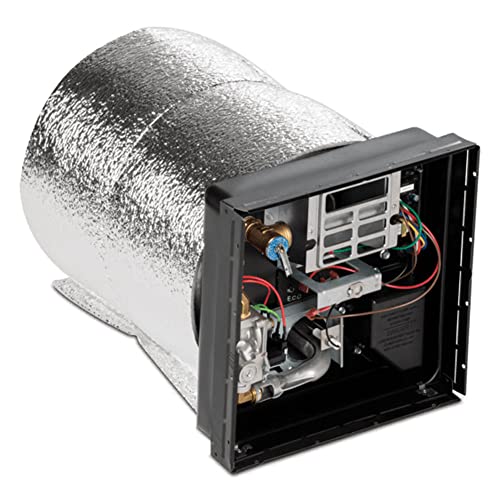
The Atwood Dometic WH-6GA (#94001BP) is an appliance manufactured for recreational vehicles, travel trailers, and campers. If you are browsing replacement parts to address a lack of warm air, a sweet coolant smell, or wet passenger-side carpeting in an automobile, this product represents a category mismatch. It is an RV domestic water heater intended to supply hot water to camper plumbing fixtures, not an automotive heat exchanger designed for passenger car heating, ventilation, and air conditioning (HVAC) systems.
According to the provided listing details, this unit carries model designation WH-6GA and part number 94001BP under the Atwood and Dometic brand names. The physical specifications note a black finish with listed exterior dimensions of 12.75 x 12.75 x 12.75 inches. Key operational details such as fuel source, electrical draw, ignition style, and tank capacity are not specified in the catalog data, meaning buyers must consult external manufacturer documentation to verify specific operational capabilities.
Understanding the distinction between an RV water heater and an automotive heater core is essential for parts buyers. An automotive heater core is a compact radiator-style component plumbed into an engine's pressurized cooling system. Hot engine coolant flows through the core while the vehicle blower motor directs air across its metal fins to warm the passenger cabin. Conversely, the Atwood Dometic WH-6GA is an independent utility appliance that heats potable water using dedicated RV power or gas connections, bearing no mechanical role in automotive engine cooling or cabin climate control.
For recreational vehicle owners who genuinely need to replace an onboard camper water heater, practical ordering considerations center on fitment and compatibility. RV utility cutouts vary widely across models and years, making it critical to measure your compartment opening against the 12.75 x 12.75 x 12.75-inch listed casing. In addition, you must check your existing appliance data plate to confirm that part number 94001BP aligns with your trailer's plumbing rough-in, exhaust venting layout, and electrical or gas supply lines.
A significant limitation of this listing is the absence of detailed packaging and hardware information. The product data does not state whether this unit includes an exterior access door, mounting flanges, a pressure-relief valve, or installation hardware. Anyone considering this purchase should anticipate the possibility of sourcing mounting kits, sealant, or plumbing adapters separately depending on their camper's current setup.
Shoppers troubleshooting an automobile's heating system should bypass this unit and search for a vehicle-specific automotive heater core matched to their exact year, make, model, and engine configuration. RV and camper owners seeking to replace an Atwood or Dometic water heater should verify that model WH-6GA and part number 94001BP directly interchange with their original equipment before placing an order.
The product is identified under model number WH-6GA and part number 94001BP from Atwood and Dometic. Sizing is listed at 12.75 inches in length, 12.75 inches in width, and 12.75 inches in height, with a black exterior finish.
Specific technical data regarding gas input ratings, recovery rates, electrical voltage, and plumbing port thread sizes are omitted from the listing data. RV owners should check their vehicle appliance plate or manufacturer manuals to ensure full compatibility with existing utility lines.

Pros
- Comprehensive kit includes ECO switch, thermostat switch, protective foam cover, connecting wires, and four spare fuses
- Lists detailed model compatibility for dozens of popular Atwood electronic RV water heater configurations
- Provides an exact 98-degree Celsius thermal cutoff threshold tailored to RV water heating safety standards
Cons
- Represents a category mismatch for automotive shoppers seeking a passenger vehicle cabin heater core
- May require sourcing secondary wire terminals if original appliance connectors differ in size
- Listing does not provide verified customer review feedback or formal written warranty terms
The AMI PARTS 91447 assembly is an aftermarket thermal cutoff and thermostat kit built specifically for Atwood recreational vehicle water heaters. While listed under general automotive parts categories, this component is not an automotive cabin heater core. Vehicle owners researching dashboard coolant leaks, misty windshields, or a lack of cabin warm air in a passenger car or truck should recognize this distinction immediately. This product functions solely as an electrical safety and temperature-regulation control for camper and trailer water heating tanks.
Based on the manufacturer specifications, this kit replaces part numbers 91447 and 93866. It includes an emergency cut-off (ECO) switch, a normal operating thermostat switch, a protective black foam cover, two tinned copper connecting lead wires, and four spare thermal fuses. The cutoff switch operates at a 98-degree Celsius (208-degree Fahrenheit) threshold, designed to interrupt fuel or electrical supply if tank temperatures exceed safe operating limits. Listed compatibility encompasses a broad range of Atwood electronic models, including the G6A, GH6, GCH6, and GCH10 series, along with select marine cross-references.
In standard passenger vehicles, an automotive heater core is an entirely different mechanism. It is a mini-radiator heat exchanger installed inside the vehicle HVAC plenum under the dashboard, carrying hot engine coolant to warm the passenger cabin. Drivers experiencing sweet coolant smells, damp floor carpets, or blowing cold air often suspect a leaking or clogged heater core. However, an RV water heater thermal cutoff kit cannot resolve automotive HVAC or engine cooling system issues, as it shares no physical or mechanical connection with automobile heating systems.
For recreational vehicle owners addressing an Atwood water heater that fails to ignite or continuously trips its safety circuit, practical installation details should be considered. Power supplies must be disconnected prior to service. The supplier recommends labeling each electrical lead before disconnecting original components to ensure proper wiring order. In addition, the listing notes that factory wiring harnesses on certain water heaters may utilize different connector sizes than those included, so buyers may need a wire crimping tool and extra terminals on hand.
A realistic evaluation of this listing reveals several informational limitations. The product data lacks independent customer reviews, meaning real-world durability and terminal fit tolerances are unverified. Furthermore, the listing does not detail formal manufacturer warranty coverage or third-party safety testing certifications such as UL or CSA. Shoppers must rely on matching their existing RV appliance data plate directly against the listed model numbers rather than assuming universal camper compatibility.
This thermal cutoff kit is recommended strictly for RV owners, mobile repairers, and camper DIY enthusiasts servicing a confirmed failure on a compatible Atwood electronic water heater. Anyone looking for an automotive replacement heater core to restore cabin heat or stop a coolant leak in an automobile should bypass this product and search specifically for an HVAC heater core matching their vehicle year, make, model, and engine.
This kit is intended strictly for recreational vehicle water heaters and does not fit passenger cars, SUVs, or commercial trucks. Compatible appliance models include Atwood electronic water heaters across the G6A, GH6, GCH6, GC6AA, and GCH10 series, including specific iterations such as G6A-6E, G6A-7E, G6A-8E, GH6-6E, GC6AA-8E, and GCH10A-3E.
Cross-referenced part numbers include Atwood 91447 and 93866, as well as marine replacement numbers such as Mercruiser 45518A variants and Mallory 9-72153. Buyers must check the data tag on their specific water heater tank before ordering, as mechanical or pilot-relight water heaters may require completely different control assemblies.
The package contents detailed in the product specifications include one ECO switch assembly, one thermostat assembly, one protective black foam cover, two tinned copper connecting lead wires, and four individual replacement thermal fuses. The entire packaged assembly measures approximately 3 by 2 by 1 inches.
No installation tools, terminal crimpers, or alternate wire connectors are supplied in the package. If the appliance wiring harness features different spade terminal dimensions, suitable replacement terminals must be sourced separately to ensure secure electrical connections.

Pros
- Broad cross-compatibility with common Atwood, Dometic, and Suburban RV electric water heater models
- Standard screw-in replacement format for 120-volt recreational vehicle domestic water systems
- Constructed with materials stated to resist mineral accumulation and high operational heat
Cons
- Category mismatch: this is an electric RV potable water heater element, not an automotive cabin heater core
- Conflicting warranty coverage details between the listing title and feature bullet points
- Product details do not confirm whether a replacement gasket or O-ring is included
While this product appears in automotive replacement search queries due to its parts classification, it is critical to clarify that it is not an automotive cabin heater core. This ATEEfaee component is an electrical screw-in immersion element designed exclusively for recreational vehicle domestic water heaters. Vehicle drivers experiencing poor cabin airflow, fogged windshields, damp passenger carpeting, or a sweet coolant odor will not resolve those issues with this part. Those symptoms often point to automotive cooling and HVAC concerns, whereas this product heats potable water inside a travel trailer or motorhome storage tank.
For RV owners and campers, this element serves as an aftermarket replacement for several widespread part numbers, including Atwood 92249, 91160, and 92097, as well as Suburban 520900, 520789, SU520789, and 232794. The element operates on 110V to 120V alternating current, delivering between 1400W and 1440W of heating output. It features a standard screw-in base and listed dimensions of 11 x 1.5 x 1.5 inches, matching popular RV water tank configurations such as the Atwood GC6AA series and Suburban SW series.
Understanding the distinction between an automotive heater core and an RV water heater element prevents costly ordering mistakes. A vehicle heater core is an aluminum or copper-brass heat exchanger mounted inside a dashboard HVAC housing. It relies on hot engine coolant circulating through internal passages to warm the passenger compartment. In contrast, this RV element is an exposed electrical resistance rod designed to sit fully submerged inside a dedicated potable water tank powered by shore electricity or an onboard generator.
When purchasing an electric element for an RV water heater, buyers should verify the exact model tag on their water heater tank rather than relying solely on travel trailer brand names. Check the physical clearance inside the tank to confirm that an 11-inch element fits without contacting internal walls or the anode rod. Additionally, installation usually requires a specialized thin-walled element socket wrench and a fresh sealing gasket to prevent water leaks around the threaded collar.
There are notable limitations and ambiguities in the listing data that buyers should evaluate before ordering. The manufacturer listing features a clear warranty contradiction, stating a 1-year warranty in the title while advertising a 3-year warranty in the feature bullets. Furthermore, the listing does not explicitly state whether a replacement rubber gasket or O-ring is included in the package, meaning purchasers may need to acquire a sealing ring separately.
For RV owners dealing with lukewarm or unheated water in a compatible Atwood, Dometic, or Suburban tank, this element represents a straightforward replacement option matching OEM specifications. However, passenger car, truck, and SUV owners diagnosing cabin climate control failures must pass on this component entirely and search for a vehicle-specific automotive heater core that matches their exact vehicle year, make, model, and engine configuration.
This heating element is engineered strictly for recreational vehicle water heaters and has zero application for automotive engine cooling or cabin HVAC systems. It is listed to replace Atwood and Dometic part numbers 92249, 91160, and 92097, fitting models such as GCH6-4E, GCH6-6E, GCH6-7E, GCH6A-7E, GCH6A-8E, GCH6A-10E, GCH10A-2E, GCH10A-3E, GCH10A-4E, GC6A-7E, GC6AA-7E, GC6AA-8E, GC6AA-9E, GC6AA-10E, GCG6A-9E, GC10A-2E, GC10A-3E, GC10A-4E, G6A-3E, G6A-4E, G6A-6E, G6A-7E, G6A-8E, GH6-3E, GH6-4E, and XT Series.
It also fits camper heater models GC6AA-7, GC6AA-7P, GC6AA-8, GC6AA-8P, GC10A-2, and GC10A-2P. For Suburban brand appliances, the 520900 specification replaces 520789, SU520789, and 232794, fitting Suburban SW Series water heaters including SW4, SW6, SW10, SW12, and SW16 models such as SW10DE, SW10DEL, SW10DEM, SW10PE, SW10PER, SW6DE, SW6DEL, SW6DEM, SW6PE, and SW6PER.
Replacing an electric water heater element in an RV requires specific safety precautions. Always disconnect the vehicle from 120-volt shore power and switch off the water heater breaker before beginning work. The water heater tank must be depressurized and fully drained prior to removing the old screw-in element to prevent water flooding the compartment.
Never apply electrical power to an immersion element when the water heater tank is dry. Energizing an element without full water submersion causes rapid element burnout within seconds. Before installation, confirm the condition of the tank threads and ensure you have an appropriate rubber gasket to create a watertight seal against the tank wall.


Frequently Asked Questions
What distinguishes a Dometic RV furnace from a portable heater?
Dometic RV furnaces are permanently mounted, ducted heating appliances powered by liquid propane and a 12-volt DC electrical system. Unlike a portable space heater or a standalone diesel heater for tent camping, these units vent combustion exhaust outside the vehicle while circulating warm air through internal ducts. This fixed installation provides uniform coach heating without taking up valuable living floor space.
How do I know whether my RV water heater runs on gas, electric, or both?
Check the model number label located behind the exterior access door. Models labeled with GA run exclusively on LP gas with electronic direct spark ignition, while models containing GEA feature both a gas burner and an electric heating element. Dual-source models allow you to run on campground 120-volt AC power to conserve propane, or operate both heat sources simultaneously for faster water recovery.
Do Dometic aluminum water heater tanks require a sacrificial anode rod?
No, Dometic and Atwood water heaters engineered with aluminum tanks do not require an anode rod. The inner aluminum alloy naturally resists corrosion from standard water supplies. Installing an aftermarket magnesium or zinc anode rod into an aluminum tank can cause unwanted chemical reactions and void the manufacturer warranty.
Why does an RV water heater thermal cutoff fuse open?
A thermal cutoff fuse melts and shuts off the fuel valve when excessive heat or flame rollout occurs around the burner tube. Common causes include blocked exhaust flues, spider webs inside the burner tube, or a malfunctioning thermostat. If your 91447 thermal cutoff opens, inspect and clear the combustion path before installing a replacement fuse.
What size RV furnace BTU rating is needed for a medium travel trailer?
Most medium travel trailers and motorhomes require between 25,000 and 30,000 BTUs to maintain comfortable indoor temperatures during freezing weather. Low-profile models like the DFMD 25111 or DFMD 30111 deliver targeted airflow while fitting cleanly into compact cabinetry cavities. Matching the BTU rating to your coach volume helps prevent rapid short-cycling and minimizes 12-volt battery draw while dry camping.
Can I replace a burned-out water heater element without removing the tank?
Yes, screw-in water heater elements can usually be serviced directly from the rear access area inside your coach. Disconnect the RV from 120-volt shore power and drain the tank completely before unthreading the old element. Keeping a spare 1400W or 1440W replacement element in your toolkit ensures you can restore electric water heating without waiting for shop appointments.




Write Your Review
No reviews yet. Be the first to share your experience!