


Shallow Hearth Airflow and Log Support Considerations
Fitting firewood into a compact hearth often turns into a frustrating puzzle when standard wood baskets crowd the firebox opening. If you are searching for a dependable Vestal Sd Series 18 Shallow Depth Steel Fireplace Grate, getting the right balance between front-to-back clearance and log capacity matters just as much as raw durability. A poorly matched grate pushes embers toward the hearth edge, creating messy cleanup and potential safety concerns. That is why pairing your setup with sturdy fireplace screens with doors can help keep errant sparks contained while maintaining safe airflow. Investing in a proper shallow depth steel fireplace grate ensures the fuel bed stays securely lifted without obstructing drafting paths.
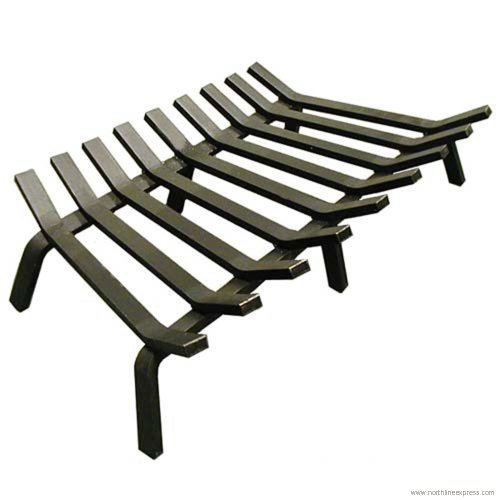
Solid steel bar construction plays a massive role in preventing heat sag over repeated burns, especially when glowing coals concentrate extreme heat at the center. Options like the TAFIEDA Fireplace Log Holder. 18 Inches Heavy Duty tackle this issue with six support legs and robotically welded steel bars designed to withstand high temperatures. The added center support helps prevent premature bowing, while adjustable feet offer extra stability across uneven brick or stone hearth floors. Before making a final purchase, double-check your firebox floor dimensions from front to back to guarantee that an 18-inch profile fits comfortably inside your designated fireplace opening.

Pros
- Center support legs help prevent bowing and bending caused by concentrated coal heat
- Adjustable 6-foot layout provides steady leveling on uneven firebox floors
- Solid steel 6-bar structure holds firewood securely above ash buildup
- Top-measured 18-inch design offers solid log capacity for compact fireboxes
Cons
- 18-inch width is too narrow for large fireboxes or oversized cordwood logs
- The manufacturer does not list exact bar thickness or steel gauge specifications
- Missing front-to-back depth and height clearance specs require manual firebox measuring before ordering
The TAFEIDA 18-Inch Heavy Duty Solid Steel Fireplace Grate is a dedicated hearth accessory engineered to hold firewood and elevate logs in residential wood-burning fireplaces. Designed with an 18-inch top-rack span, it best suits homeowners, cabin owners, and renters with operational wood fireplaces who need a compact, sturdy replacement for a warped or worn-out factory grate.
Raising firewood off the firebox floor serves a critical combustion function by allowing oxygen to circulate underneath burning logs. The six-bar rack structure holds split wood securely while letting coals and embers drop through to form a heat bed, which supports cleaner combustion and easier draft maintenance. Measuring across the top provides a wider usable cradling area than traditional grates whose widths are restricted by inwardly angled legs.
Structural integrity is reinforced by six solid steel legs rather than the typical four-leg configuration. The two added center support legs directly target middle-span sagging, which commonly occurs when heavy wood sits over concentrated coals. According to the manufacturer, the solid steel bars are factory robot-welded for consistent joints and finished in a black, heat-resistant, rust-inhibiting coating intended to withstand high operating temperatures without deforming.
Proper fit and placement depend on verifying your firebox floor dimensions. The grate features adjustable feet designed to eliminate rocking on uneven firebrick, rough mortar joints, or natural stone hearths. Because many wood fireplaces taper toward the rear, buyers must verify that the 18-inch width matches their firebox taper, leaving appropriate clearance between the grate, rear firebrick, and fireplace screen or doors.
Realistic limitations exist regarding incomplete manufacturer specifications. While the 18-inch top surface is specified, the exact front-to-back depth, bar thickness gauge, and under-grate ash clearance height are not detailed in the product data. Homeowners using longer 20-inch or 24-inch cordwood will find this model too compact, requiring logs to be bucked to shorter lengths to fit safely within the rack.
For budget-conscious homeowners seeking a reinforced replacement grate for a small or medium wood-burning hearth, the TAFEIDA 18-inch grate offers solid practical utility. The inclusion of two center support feet and adjustable leveling addresses the most common failure points of entry-level grates, making it a sensible purchase once firebox dimensions are verified.
Using a properly fitted fireplace grate is necessary for maintaining continuous airflow beneath your firewood. Elevating logs above the hearth floor allows incoming draft air to feed combustion from below, creating hotter coals and reducing unburned wood smoke.
Before purchasing, measure your firebox floor carefully. Measure the width across the front opening, the width across the back wall, and the depth from front to back. Keep in mind that a grate should leave at least two to three inches of clearance on all sides to allow proper airflow and prevent logs from rolling against doors or screens.
The adjustable six-foot design helps resolve hearth rocking. If your firebox floor has settled unevenly or features rough refractory brick, adjust the individual feet until the rack sits firmly without wobbling before loading your kindling and logs.
The TAFEIDA grate is constructed from six solid steel bars that are joined using automated robotic welding to maintain uniform joint strength across the load-bearing frame.
The primary structural upgrade is the addition of two center support legs, bringing the total foot count to six. Standard four-leg grates frequently sag in the middle over time as the center steel softens under prolonged exposure to hot embers. The dual center posts absorb downward log weight directly under the hottest part of the fire.
The steel framework is finished with a high-heat resistant, rust-inhibiting black coating designed to resist flaking and premature oxidation during regular wood-burning fireplace operation.
Frequently Asked Firebox Grate Questions
What makes a shallow depth steel fireplace grate different from standard grates?
A shallow depth steel grate features a reduced front-to-back profile specifically tailored for narrow or compact fireboxes. Standard fireplace grates often measure 14 to 18 inches deep, which can crowd shallow hearth openings and push burning logs dangerously forward. Shallow designs elevate the fuel bed while keeping wood stacked safely against the rear firebrick. This compact footprint maintains crucial underneath clearance so combustion air can draft smoothly under the fuel bed.
How do you determine if an 18-inch grate fits your fireplace opening?
Measure your firebox floor width at both the front and rear, along with the usable depth from front to back. Many shallow grates, including an 18-inch model, measure their nominal width across the top bar rather than between the feet. You need at least two to three inches of side and rear clearance so the grate does not scrape the brickwork or block drafting. If your hearth depth is limited, verify that the unit leaves ample space between the front legs and your fireplace opening.
Why do center support legs matter on a heavy-duty fireplace grate?
Center support legs distribute the weight of dense firewood and resist sagging caused by intense radiant heat. Traditional four-legged grates often droop in the middle where burning coals reach peak temperatures over extended burns. Adding middle support legs reinforces the center steel bars, helping the assembly maintain its structural shape across multiple heating seasons. This extra reinforcement prevents the grate bed from warping downward and touching the firebox floor.
Does a steel fireplace grate improve wood combustion and drafting?
Yes, raising firewood above the firebox floor significantly enhances bottom airflow into the burning coal bed. When logs sit directly on masonry ash, oxygen cannot circulate effectively, which leads to sluggish fires, excessive soot, and poor heat output. An elevated steel bar design allows air to feed the flames from below while letting fine ash fall cleanly between the bars. Maintaining proper airflow works hand-in-hand with proper fireplace ventilation options to help draw smoke smoothly up the chimney flue.
Can you use a wood-burning steel grate in a gas fireplace?
No, wood-burning grates should not be used in gas fireplaces unless explicitly rated and configured for gas burner systems. Gas appliances require specialized burner assemblies and ceramic log arrangements designed to prevent dangerous soot buildup or improper venting. While an efficient Vestal Sd Series 18 Shallow Depth Steel Fireplace Grate excels at supporting natural cordwood in a wood-burning hearth, gas systems operate under strict manufacturer installation guidelines. Always verify whether your fireplace is classified for solid wood fuel before swapping hearth accessories.
How do adjustable feet help on uneven firebox floors?
Adjustable feet allow you to stabilize the grate on irregular brickwork or mortared stone surfaces without rocking. Firebox floors often develop dips, cracks, or uneven mortar lines from years of thermal expansion and heavy log drops. Leveling the support legs prevents firewood from shifting or rolling toward the hearth opening during active burns. Sturdy, level footing keeps the fuel bed secure and protects the surrounding masonry from concentrated stress points.



Write Your Review
No reviews yet. Be the first to share your experience!