


Cracked firebrick joints and deteriorating refractory mortar pose clear hazards to firebox safety and containment. High operating temperatures inside wood stoves, masonry cavities, and prefabricated fireboxes quickly stress weak bonding seams, allowing intense heat to reach surrounding framing. Addressing damaged masonry with a specialized cedar creek rp63g with mortar fireplace setup restores structural strength across interior firebrick panels. Whether you are patching small hairline fissures or repointing mortar seams before winter, matching the proper silicate compound to your specific firebox enclosure prevents costly masonry failures. Routine firebox maintenance often pairs with inspecting surrounding hearth components or updating units like a Cedar Creek fireplace model to preserve consistent room comfort and safe heating operation.
Selecting the right refractory formulation requires evaluating working consistency, color matching, and heat tolerance. High-temperature fireplace cements rated up to 2,000 degrees Fahrenheit provide the thermal resistance needed for heavy wood fires and direct coal contact. Products packaged in standard 10.3-ounce caulking cartridges allow steady, controlled application along narrow mortar lines, whereas tub-based compounds suit broader firebrick patching tasks. Reviewing manufacturer cure instructions is essential, as many refractory silicates demand an initial air dry followed by a gradual heat cure to reach full hardness. Proper preparation ensures your firebox remains durable and ready for regular seasonal use.
Pros
- Rated for extreme continuous heat resistance up to 2,000 °F
- Pre-mixed paste format eliminates messy measuring and dry-mix dust
- Convenient water and soap cleanup prior to the heat-curing phase
- Adheres well to firebrick, mortar joints, cast iron, and chimney duct collars
- Small 16-ounce tub size is well-suited for spot repairs and seasonal touch-ups
Cons
- Requires proper air drying and a gradual heat cure to prevent bubbling or blistering
- Tub packaging requires manual troweling rather than direct caulk-gun application
- Formulated for patching joints and cracks rather than large-scale structural masonry rebuilding
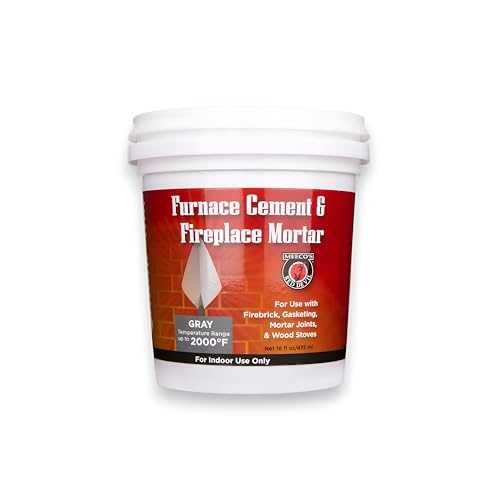
Meeco's Red Devil 1353 Gray Furnace Cement and Fireplace Mortar is a specialized high-heat bonding compound designed for wood stove operators, masonry fireplace owners, and heating appliance maintainers. Packaged in a compact 16-fluid-ounce (1-pint) tub, this sodium-silicate paste provides a practical repair solution for cracked firebrick, shifting mortar joints, boiler seams, and stove gasketing without requiring specialized mixing tools or chemical additives.
Thermal performance stands as the primary consideration for any combustion-chamber repair, and this formulation is rated for continuous exposure up to 2,000 degrees Fahrenheit. Wood stoves and fireplace fireboxes generate severe thermal cycles that quickly degrade standard construction mortars and household adhesives. By utilizing a heat-reactive sodium-silicate base, the compound hardens under controlled warmth to create a dependable seal against air leaks, flue drafts, and loose refractory bricks.
In terms of texture and application, the cement comes ready to use as a smooth, spreadable gray paste. It scoops cleanly from the tub and maneuvers easily with a small trowel or standard putty knife, filling fine fissures and wider joint separations alike. Because the gray tone matches typical cured mortar and aged firebrick, patched areas blend smoothly into existing hearth backgrounds. Uncured excess rinses away cleanly with soap and warm water, keeping tool cleanup manageable.
Achieving dependable results requires careful surface preparation and an awareness of packaging format. Surfaces must be thoroughly wire-brushed to remove soot, ash, and crumbling debris, then dampened slightly to prevent the dry masonry from drawing moisture out of the paste prematurely. While the 16-ounce tub is ideal for re-cementing a stove door gasket, sealing a chimney collar, or repairing several firebrick joints, expansive re-bricking projects will demand multiple tubs or bulk refractory mortar.
A critical consideration with silicate-based furnace cements is the curing requirement. This mortar cannot simply be applied and immediately exposed to a roaring wood fire, as rapid moisture vaporization can cause the compound to bubble, blister, or crack. Successful adhesion requires letting the material air dry thoroughly followed by a slow, gradual heat cure using a low-output fire to set the refractory bond securely.
For homeowners and property maintainers needing a dependable, American-made patching agent for annual hearth upkeep, Meeco's Red Devil 1353 provides high thermal resistance and straightforward handling. It is best suited for targeted maintenance tasks where continuous temperatures up to 2,000 degrees Fahrenheit demand dedicated high-temperature mortar.
Surface preparation directly impacts the long-term bonding strength of high-temperature furnace cement. Before applying the mortar, use a stiff wire brush to clear away all soot, creosote, loose aggregate, and old mortar fragments from the crack or joint. Lightly misting the porous firebrick with water helps keep the cement pliable during application and promotes better contact bonding.
Apply the cement firmly into the joint using a putty knife or pointing trowel, pressing it deep into the opening to eliminate voids. Allow the repaired area to dry naturally for the duration specified on the container before introducing warmth. Begin curing with a small, gradual kindling fire to bake the sodium-silicate binder slowly, preventing internal moisture from boiling and weakening the seal.
Handling uncured Meeco's Red Devil 1353 requires only basic soap and warm water. Clean your putty knives, trowels, and any accidental drips on hearth surrounds immediately after application, as the compound hardens significantly as it dries.
Once cured by heat, the cement forms a rigid, permanent bond that is unaffected by water. Maintain your heating equipment by inspecting repaired joints and gasket channels at the start of every heating season, touching up any new hairline cracks that may develop from normal expansion and contraction in the firebox.

Pros
- Continuous 2,000 degree Fahrenheit heat resistance handles intense wood-stove and firebox environments
- Standard 10.3-ounce cartridge allows precise application compared to troweling from heavy tubs
- Tan shade matches common interior fireplace firebrick and refractory panels
- Water-soluble formula ensures fast cleanup of tools and spills before it sets
Cons
- Tan coloring may contrast noticeably against black cast-iron stove surfaces or heavily sooted fireboxes
- Requires a separate standard caulking gun that is not included in the package
- Must be allowed to dry and heat-cure gradually to avoid bubbling or premature cracking
Meeco's Red Devil 122 Tan Furnace Cement and Fireplace Mortar is a specialized high-temperature repair adhesive designed for homeowners and property owners dealing with degraded masonry in wood-burning fireplaces, wood stoves, pellet appliances, and heating boilers. Packaged in a convenient 10.3-ounce cartridge, this sodium-silicate-based compound fills the gap between loose refractory firebricks and seals structural joints where extreme thermal expansion regularly causes standard construction mortars to fail.
Thermal endurance is the defining strength of this mortar compound, with a continuous heat rating reaching up to 2,000 degrees Fahrenheit. That performance threshold is critical inside active fireboxes where concentrated burning coals and firewood produce blistering temperatures. Beyond basic crack repair in firebricks, the compound functions effectively for cementing chimney collars, sealing flues, re-pointing degraded mortar joints, resetting stove gasketing, and joining metal ductwork where heat containment is essential.
From a material standpoint, the formulation relies on a dense sodium-silicate base that cures into a stone-like bond under heat. The tan hue is deliberately blended to match standard commercial firebrick and precast refractory panels, preventing obvious discolored patch lines inside decorative hearth settings. At 0.5 pounds in total weight and measuring 2 by 2 by 11.5 inches, the cartridge provides enough volume for multiple joint repairs or seasonal stove maintenance sessions while remaining compact enough for storage on a utility shelf.
Application is straightforward thanks to the standard caulk-tube format. Unlike premixed tubs that require mortar boards, margin trowels, and frequent cleanup, this cartridge loads directly into any standard 10-ounce caulking gun. The smooth consistency flows easily into tight hairline gaps and deep firebox joints, allowing accurate bead control with minimal mess. Before the cement undergoes its cure cycle, any accidental drips or tool residue clean up easily with simple soap and warm water.
Realistic limitations primarily revolve around application aesthetics and post-application handling. The light tan finish looks natural on refractory brick, but it will stand out sharply against black cast iron, dark coal stoves, or black flue collars unless covered or weathered by soot. Additionally, while the mortar delivers high final strength, users should verify that the application surface is clean, free of loose ash, and that the mortar is allowed to fully dry before building high-output fires to avoid steam expansion and joint blistering.
Meeco's Red Devil 122 Tan Furnace Cement is an excellent, budget-friendly investment for any wood-burning fireplace or stove owner preparing their hearth for the winter season. Its 2,000-degree thermal ceiling, dependable USA-made pedigree, and easy cartridge application deliver practical value for DIY masonry repair, helping you maintain a safe and sealed firebox without hiring a specialist for minor maintenance.
The core formulation of Meeco's Red Devil 122 is rooted in high-grade sodium silicate, an inorganic compound renowned for its resilience in thermal applications. Engineered to withstand continuous exposure up to 2,000 degrees Fahrenheit, it resists crumbling, spalling, and deterioration under intense direct flame exposure.
Manufactured in the United States, this compound adheres to traditional stove-and-furnace care standards established by the brand since 1937. Its dense consistency creates a durable seal between masonry-to-masonry and masonry-to-metal contact points, ensuring prolonged structural integrity along chimney collars and firebox walls.
Surface preparation is key to achieving a long-lasting bond. Before applying the mortar, the repair area must be thoroughly cleared of loose soot, powdery ash, rust, and deteriorating old cement. Dampening the firebrick slightly prior to application can help improve adhesion.
Cleanup during application requires only warm water and mild soap, provided spills are addressed before the compound cures. Once applied, allowing adequate ambient drying time before introducing gentle, gradual heat ensures the mortar cures into a rock-solid, crack-resistant barrier.

Pros
- High heat resistance rated up to 2,000°F for direct contact in fireboxes, wood stoves, and forges
- Standard 10.3 oz cartridge format allows controlled application into narrow joints and cracks
- Buff finish matches standard light refractory brick and paneling better than dark cements
- Durable bond cures hard across firebrick and masonry surfaces
Cons
- Standard 10.3 oz tube size is intended for targeted crack and joint repairs rather than large-scale brick rebuilding
- Requires proper surface preparation and heat curing as specified by refractory cement guidelines to achieve maximum hardness
Rutland Buff Fireplace Mortar is a specialized refractory cement engineered for repairing damaged firebrick, repointing mortar joints, and sealing cracks in high-heat heating appliances. Homeowners with wood-burning fireplaces, wood stoves, forges, or pre-cast refractory firebox panels can use this product to maintain hearth integrity without hiring a full masonry crew for minor cosmetic and joint fixes.
High-temperature resilience is the primary functional advantage of this mortar, carrying a manufacturer rating of up to 2,000°F. In solid-fuel environments like wood-burning fireplaces and stoves, internal temperatures easily degrade standard construction mortars, leading to crumbling seams and compromised firebox containment. This refractory formula cures hard to establish a rigid bond between masonry components, keeping firebricks anchored and seam lines tightly sealed against direct flame and ember exposure.
Packaging comes in a standard 10.3 oz caulking tube measuring approximately 1.88 by 1.88 by 11.25 inches and weighing 1.3 pounds. This delivery method provides clean, directed dispensing directly into narrow cracks and recessed joint lines where troweling loose paste can be messy or imprecise. The buff color is specifically tailored to match common tan and light-colored refractory firebricks, offering a clean, uniform cosmetic appearance that blends in far better than black or dark gray cements.
Successful maintenance with refractory cement typically requires thorough pre-application cleaning to remove loose ash, soot, and crumbling debris from the target cracks. Because this mortar is packaged for cartridge dispensing, users can apply a steady bead directly into cleaned seams before smoothing or jointing. As with most refractory materials, allowing proper air drying and following manufacturer curing recommendations during initial small fires ensures the material reaches its full 2,000°F thermal resistance without bubbling or spalling.
While this 10.3 oz cartridge is ideal for sealing cracks and spot-pointing eroded joints, it is not sized for laying entire fireboxes or rebuilding complete masonry fireplaces. Buyers should assess the overall depth and extent of damage; wide structural gaps, displaced structural masonry, or crumbling exterior chimney walls may require professional masonry rebuilding rather than surface caulking. Additionally, buyers should verify whether their existing firebrick requires a buff, black, or gray tone to ensure an aesthetically pleasing match.
For DIY-minded homeowners and wood stove operators looking to extend the service life of their firebox masonry, Rutland Buff Fireplace Mortar provides a dependable, high-temperature bonding solution from a long-standing American brand. Its 2,000°F rating, convenient tube packaging, and natural buff tone make it a practical maintenance investment for keeping hearth surfaces sealed, neat, and protected through active burning seasons.
Rutland Fireplace Mortar is formulated for direct repair of joints, cracks, and firebrick seams in wood stoves, fireboxes, and chimney assemblies. To achieve optimal bonding, thoroughly clean out any loose soot, creosote, and broken mortar before application.
Dispense the mortar smoothly into joints using a standard cartridge gun. For maximum durability, allow the repair to air-cure according to package directions before gradually exposing it to low heat, ensuring the cement hardens completely without trapping moisture.
This refractory mortar is rated to withstand temperatures up to 2,000°F, making it suitable for high-heat environments including wood-burning fireboxes, wood stoves, refractory firebox panels, and blacksmithing forges.
The buff color is specifically formulated to complement tan, cream, and standard light refractory firebricks. For dark cast iron stoves or charcoal-colored fireboxes, verify whether buff or an alternate color such as black or gray provides the preferred visual match.
Pros
- Resists extreme heat exposure with a manufacturer-rated limit of 2000 F
- Bonds effectively across both porous masonry firebrick and rigid metal components
- Standard 10.3 oz cartridge design fits common caulking guns for easy joint filling
- Pack of two offers ample supply for seasonal repairs or multiple hearth appliances
Cons
- Cartridge tubes do not include replacement caps for storing partially used sealant
- Requires a separate caulking gun for application that is not included in the package
- Requires proper air-dry and gradual heat curing before handling intense fires
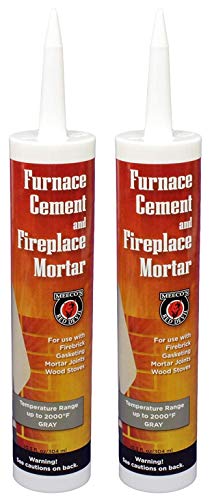
MEECO'S RED DEVIL 121 Furnace Cement and Fireplace Mortar is a specialized high-temperature bonding sealant formulated for residential heating and hearth upkeep. Supplied in a practical two-pack of 10.3 oz cartridges, this pre-mixed gray compound is intended for homeowners, wood-burning stove operators, and DIY remodelers who need to repair damaged firebrick, reseat loose stove gaskets, or seal flue connections.
Rated for continuous working temperatures up to 2000 F, the cement provides the heat tolerance needed for high-stress combustion chambers. It forms an effective bond between masonry surfaces as well as between masonry and metal, making it versatile for sealing chimney collars, furnace joints, boiler connections, and stove pipe collars that undergo repeated expansion and contraction cycles.
The pre-mixed formulation removes the guesswork of measuring dry powders and water, ensuring consistent texture and strength right out of the tube. Its gray finish provides a clean visual match against standard firebox brickwork, refractory panels, and cast-iron stove components without leaving conspicuous discolored patches.
Dispensing through a standard 10.3 oz cartridge enables controlled placement deep into cracked mortar lines, narrow seams, and gasket channels where troweling can be awkward. Because the manufacturer specifies that the cartridges do not include replacement caps, buyers should plan repair tasks in batches or keep a temporary sealing method handy to preserve unused mortar.
As with all furnace cements, proper curing is essential for long-term durability. The compound needs time to air-dry and should be heated gradually during initial use rather than exposed to sudden, roaring fires, which helps avoid steam bubbles or premature cracking along the repair line.
For anyone managing seasonal maintenance on a wood stove, fireplace firebox, or chimney collar, MEECO'S RED DEVIL 121 offers a reliable, heat-resistant seal in a practical format. It provides solid utility and good value for keeping hearth appliances operating safely and efficiently.
Application of MEECO'S RED DEVIL 121 requires a standard 10 oz caulking gun. Before dispensing, surfaces should be cleaned thoroughly to remove loose soot, ash, rust, and deteriorated mortar to ensure a firm, long-lasting bond between masonry or metal surfaces.
Cut the nozzle tip to match the width of the gap or joint being repaired. Because the cartridges do not include resealing caps, planning your repair project to use full tubes or having an airtight nozzle plug on hand will help prevent the remaining mortar from drying out prematurely.
Engineered for high-heat environments, this furnace cement maintains structural integrity under exposure to temperatures up to 2000 F. This extreme heat tolerance makes it suitable for direct firebox contact, flue collars, and boiler housings where standard construction sealants would quickly fail.
The multi-purpose composition creates strong adhesion between disparate materials, specifically anchoring masonry to metal. Its dense gray paste cures to a hard, rigid joint that resists deterioration from typical wood and coal combustion byproducts.

Pros
- High heat resistance handles continuous operating temperatures up to 2,000 degrees Fahrenheit.
- Pre-mixed formulation saves time by eliminating dry powder measurement and water mixing.
- Washes away easily with standard soap and water before curing.
- Versatile bonding across firebrick, cast-iron stove seams, ductwork, and chimney collars.
Cons
- Compact 8 fl oz size is restricted to minor repairs rather than extensive firebox rebuilds.
- Requires prompt cleanup before it sets, as cured silicate mortar hardens solidly.
- Needs proper curing following container instructions before subjecting repairs to high heat.
Meeco's Red Devil 1352 Gray Furnace Cement and Fireplace Mortar is a high-temperature silicate compound designed for patching, sealing, and bonding heating appliances. Packaged in a compact 8 fluid ounce tub, this pre-mixed formula serves wood stove operators, fireplace owners, and DIY remodelers seeking a targeted solution for minor refractory repairs. It eliminates the inconvenience of measuring and blending dry mortar when addressing localized cracks, loose chimney collars, or failing firebox seams.
Thermal endurance forms the core advantage of this gray mortar compound. The manufacturer rates this sodium-silicate formula to withstand continuous operating temperatures up to 2,000 degrees Fahrenheit, making it capable of handling intense direct-flame environments found in wood-burning fireboxes, boiler chambers, and stove interiors. This rating helps ensure that cured patches maintain structural stability under typical seasonal heating cycles without prematurely flaking or turning to powder.
Workability and bonding strength stand out in practical application. The cement features a smooth consistency that spreads directly from the container into thin joints, narrow seams, and hairline cracks in refractory masonry. Because it utilizes a sodium-silicate base, it bonds securely to firebrick, stone, and cast iron. Its neutral gray finish helps completed patches blend unobtrusively into existing masonry joints and dark stove bodies without unsightly contrast.
Routine handling is straightforward due to its ready-to-use state. Users do not need to add water, chemical hardeners, or specialized thinners prior to application. Before the compound cures, any excess squeeze-out or misplaced mortar cleans up quickly with ordinary soap and water. Proper bond formation depends on clean surfaces, so clearing away loose ash, soot, and failing debris prior to pressing the compound into cracks ensures the best mechanical grip.
Despite its strength, the 8 fl oz tub size creates practical limitations for larger projects. This volume is strictly tailored for minor spot repairs, such as resetting an individual collar, seating a door gasket, or patching a couple of cracked firebricks, rather than rebuilding an entire firebox. Silicate cements also require thorough drying and careful heat curing according to manufacturer guidelines to reach full rated hardness before firing the appliance at maximum output.
For seasonal wood stove operators and fireplace owners, Meeco's Red Devil 1352 delivers an economical, reliable option for ongoing appliance upkeep. Its 2,000-degree Fahrenheit thermal threshold, pre-mixed convenience, and simple water cleanup make it a sensible choice for routine maintenance and minor refractory repairs around the home.
Preparation is essential for achieving a long-lasting bond with Meeco's Red Devil 1352. Before pressing the mortar into seams or cracks, remove all loose soot, ash, and degrading mortar using a stiff wire brush to expose clean masonry or bare cast iron.
Clean application tools, hands, and adjacent hearth surfaces immediately with warm water and soap before the compound begins to set. Once cured under heat, the mortar cures into a durable, heat-resistant seal that requires only routine visual inspection during standard annual chimney and stove cleanings.
Formulated around a high-strength sodium-silicate base, this mortar provides steady cohesion under continuous thermal stress up to 2,000 degrees Fahrenheit. The high-density paste resists crumbling and joint failure in direct contact with heat from wood stoves, furnaces, and fireboxes.
Manufactured in the United States, this compound provides consistent density throughout the 8 fl oz container. This uniform factory blend avoids the air pockets, weak ratios, or clumping often caused by hand-mixing small batches of dry refractory cement.

Pros
- High 2000°F heat rating handles intense interior firebox environments safely
- Pre-mixed cartridge format fits standard caulking guns for controlled, targeted application
- Extensive coverage of up to 99 feet per tube with a 1/8-inch bead
- Two-pack provides ample material for multi-joint re-pointing and future upkeep
Cons
- Formulated strictly for interior firebox use and not suitable for exterior masonry
- Requires heat to achieve a full cure, necessitating a planned fire according to directions
- Designed for joint pointing and firebrick bonding rather than large structural rebuilding
The Rutland Fireplace Mortar Cartridge 63G 2-Pack in gray is a dedicated refractory compound designed specifically for maintaining and repairing interior masonry fireboxes. Fireplace owners, remodelers, and property managers often discover minor chips, cracked firebricks, or eroding mortar lines during seasonal inspections. This pre-mixed formulation targets those exact problem areas by providing a resilient, heat-resistant seal between refractory bricks without requiring heavy masonry tools or bulk cement mixing.
Thermal resilience is the core functional advantage of this compound, boasting a manufacturer rating of up to 2000 degrees Fahrenheit (1090 degrees Celsius). Standard household caulk or typical Portland-based mortar cannot withstand direct exposure to open fires and will quickly crumble or release fumes under intense heat. Rutland specifically engineered this mortar to endure severe hearth temperatures, ensuring that sealed joints and bonded firebricks remain intact throughout the burning season.
Each cartridge contains 10.3 ounces of mortar and measures 1.875 by 1.875 by 11.25 inches, fitting neatly into standard caulking guns. This dispensing style makes targeting narrow joints and recessed crevices significantly easier than traditional trowel-applied compounds. According to manufacturer specifications, a single tube provides approximately 99 linear feet of coverage using a 1/8-inch bead, making this two-pack more than sufficient for extensive re-pointing projects or bonding several loose refractory bricks.
Successful application requires thorough surface preparation and proper curing. All soot, loose ash, crumbling mortar, and debris should be completely brushed or vacuumed away from the target area before dispensing. Once the mortar is applied and smoothed into the joints, it requires heat to properly cure and achieve its full structural hardness. Users should allow the initial application to dry before gradually firing the hearth to complete the chemical bond as outlined in the product instructions.
Realistic limitations must be kept in mind prior to purchase. This mortar is explicitly formulated for interior firebox use and should not be used on exterior chimneys, outdoor fire pits exposed to rain, or large open voids where structural concrete is required. It is also limited to small chip patching, firebrick bonding, and standard joint pointing rather than rebuilding collapsed masonry walls.
For homeowners and wood-burning fireplace owners seeking a tidy, highly heat-resistant way to repair damaged mortar joints and secure loose firebricks, this two-pack from Rutland delivers exceptional practical value. Its balance of high thermal tolerance, ready-to-use packaging, and generous coverage makes seasonal firebox upkeep straightforward and reliable.
Application of the Rutland 63G mortar relies on a standard caulk gun applicator, which allows clean delivery directly into joint gaps. The 10.3-ounce cartridge dimensions match standard household caulking frames, eliminating the need for specialized trade equipment.
The compound provides approximately 99 feet of coverage per tube based on a 1/8-inch bead, giving the two-pack nearly 200 feet of total bead length. This extensive yield accommodates multi-seam tuck-pointing and multiple chipped brick fixes in a single purchase.
Unlike air-curing sealants, this refractory mortar requires heat exposure to complete its hardening process. Applying low, gradual heat after an initial drying phase ensures the compound sets correctly without bubbling, blistering, or losing adhesion along the firebrick edges.
Routine maintenance of firebox mortar joints is a vital part of hearth safety. Degraded or cracked joints can allow excessive heat to transfer toward surrounding structural framing or underlying masonry layers, making prompt repairs essential.
With a continuous heat tolerance rated up to 2000°F (1090°C), this compound is built to withstand direct wood fire and glowing embers. Its stable composition avoids the cracking and flaking common to non-refractory repair materials.
Users must verify that all repair work remains within the interior firebox space. Because this product is designated strictly for interior use, exterior chimney crowns, exposed flues, and outdoor installations require weather-resistant exterior refractory products instead.

Pros
- Resists extreme operating temperatures up to 2,000 degrees Fahrenheit without combusting
- Ready-to-use paste formulation removes the mess of mixing dry refractory mortar by hand
- Cleans up easily with water before the material cures, minimizing job-site cleanup hassle
- Multi-pack quantity offers practical value for homeowners tackling multiple hearth or stove repair projects
Cons
- Requires heat exposure from firing to achieve full cure and reach rock-hard structural strength
- Black finish creates noticeable visual contrast when applied to light tan refractory brick
- Individual container volume is not detailed in the product specifications and should be verified prior to starting large masonry repairs
DAP 18854 Stove & Fireplace Mortar is a specialized high-temperature silicate cement designed for patching, joint sealing, and structural maintenance in heat-exposed environments. Supplied as a six-pack bundle, this compound is tailored for homeowners, cabin owners, and DIYers maintaining masonry fireplaces, wood-burning stoves, pellet stoves, or outdoor fire pits. Rather than mixing messy dry powders with water, users get a pre-formulated paste that targets compromised mortar joints and cracked refractory surfaces directly.
The standout performance metric of this black mortar is its high-heat rating, tolerating continuous temperatures up to 2,000 degrees Fahrenheit. The non-combustible silicate cement formula creates a tight, resilient seal around high-stress junction points, such as firebrick mortar joints, stove collars, and chimney connections. By sealing gaps where sparks or combustion gases might escape, it helps maintain proper draft conditions and firebox containment during intense burns.
Application convenience is built into the material composition. The pre-mixed paste consistency spreads smoothly into narrow gaps, hairline cracks, and seam transitions. Before heat is introduced, the compound allows for straightforward water clean-up, letting you wipe away stray smears from brick faces or stove metal with a damp cloth. Once installed and air-dried, the mortar undergoes a final transformation when fired, setting rock hard under direct heat to produce a solid, durable bond that resists crumbling.
From a maintenance perspective, the black coloration is well matched to cast-iron stoves, charcoal-toned inserts, and seasoned masonry fireboxes where bright gray or white mortar would stand out awkwardly. Its versatility extends across both indoor wood-burning setups and exterior fire pits, giving property owners a single solution for recurring seasonal hearth upkeep across multiple heating appliances.
Buyers should keep a few practical limitations in mind before beginning a repair project. Because this silicate cement requires firing to cure completely, it is not meant to achieve full hardness at ambient room temperature alone; a gradual initial burn is necessary to bake the mortar without bubbling. Additionally, the black color will remain highly visible on pale cream or tan refractory bricks, so users seeking a color-matched restoration on lighter masonry may need to consider aesthetic impact.
For owners of wood stoves, fire pits, and traditional masonry hearths, DAP 18854 Stove & Fireplace Mortar delivers a practical, heat-resilient repair solution. The six-pack format offers steady value for extensive joint tuckpointing or routine annual upkeep, giving you dependable 2,000-degree protection without the complexity of traditional masonry mixing.
DAP 18854 Mortar is engineered with a non-combustible silicate cement base capable of enduring heat loads up to 2,000 degrees Fahrenheit. This elevated threshold makes it suitable for direct-flame exposure areas, including firebrick linings, wood stove fireboxes, and chimney flue connections.
Under normal operational heat, standard masonry mortars can degrade, crack, or spall. The high-heat tolerance of this formulation ensures that joint seals remain intact under rapid temperature cycling, protecting surrounding framing and hearth structures from escaping embers and heat leaks.
This mortar is supplied in ready-to-use paste form, eliminating guesswork around water ratios and mix consistency. It adheres directly into cleaned joints and cracks, allowing users to tool and smooth the surface with standard masonry tools or putty knives.
Clean-up requires only water while the paste is still wet, preventing permanent staining on adjoining metal or masonry surfaces. Full curing relies on thermal activation: after an initial air-drying period, the fire feature must be fired to bake the silicate compound into its final rock-hard state.

Pros
- Standard cartridge format dispenses easily with a standard caulking gun, avoiding messy trowel mixing
- Heat-cured bond hardens to the durability of real firebrick
- Non-asbestos formulation ensures safer handling around the home
- Smooth texture fills tight seams and surface hairline fractures effectively
Cons
- Requires proper heat curing to achieve listed firebrick-like durability
- Application requires a separate caulking gun not included in the package
- Specific maximum operating temperature rating is not listed in the provided specifications, requiring verification for extreme high-heat applications
The Imperial KK0067-A Cement and Mortar Cartridge is a dedicated hearth repair product built for homeowners, wood stove operators, and fireplace owners who need to repair damaged firebrick or re-point deteriorating mortar lines. Rather than mixing messy dry powders in buckets for small seasonal touch-ups, this product provides a pre-mixed, non-asbestos refractory paste packaged in an accessible 10.3-ounce container. It suits anyone seeking to keep their firebox surfaces intact and prevent heat from bypassing protective firebrick linings.
Functionally, the compound delivers superior bonding strength and is engineered to spread easily across uneven masonry surfaces. The formulation cures under heat to achieve durability comparable to firebrick itself, ensuring the repaired joint can withstand ongoing heating cycles. Because it comes in a neutral gray color, patches and joint lines naturally blend with common firebrick mortar and masonry hearth interiors rather than leaving an unsightly mismatched repair.
The build format follows the familiar 2 x 2 x 12 inch cartridge profile, weighing approximately 1 pound. Using a standard household caulk gun allows direct bead placement into deep gaps, narrow firebrick seams, and localized surface spalls. This targeted delivery significantly reduces waste and cleanup compared to troweled paste, keeping repair materials off surrounding hearth accessories and decorative trims.
Using this mortar cartridge requires thorough surface preparation and careful attention to the curing process. Firebox surfaces should be cleaned of loose ash, soot, and crumbling debris prior to application so the compound can adhere directly to the masonry substrate. Once the mortar is laid into place and smoothed, initiating a controlled fire to heat cure the material allows it to attain its specified firebrick-grade hardness.
Realistic limitations must be kept in mind before starting a repair. This mortar cartridge is intended for crack patching and joint resealing rather than reconstructing completely collapsed structural walls or large structural hearth sections. Additionally, because the manufacturer data sheet does not state an explicit maximum continuous temperature threshold, users with specialized high-output appliances should verify their stove manual requirements before application.
For everyday fireplace owners and wood stove operators handling routine pre-winter maintenance, the Imperial KK0067-A cartridge represents a cost-effective, straightforward repair solution. Its pre-mixed design, non-asbestos formula, and heat-activated durability make keeping a firebox safe and properly sealed simple and mess-free.
Applying the Imperial KK0067-A mortar cartridge is straightforward when paired with a standard 10-ounce caulk gun. Users can trim the cartridge nozzle to match the width of the crack or joint being repaired, allowing precise control over material flow into hairline fractures or wider gaps between firebricks.
Proper heat curing is necessary for this mortar to achieve its listed firebrick-like durability. Homeowners should allow the compound to set according to package instructions before gradually raising firebox temperatures with a modest, controlled fire to prevent blistering and secure a long-lasting masonry bond.
Frequently Asked Questions
How do you apply mortar for a cedar creek rp63g with mortar fireplace project?
Clean the repair joint thoroughly of loose soot and debris, dampen the firebrick surface lightly with water, and inject the silicate mortar directly into the gap. Standard 10.3-ounce cartridges fit directly into common caulking guns, allowing accurate bead placement along narrow refractory seams. Smooth the fresh compound with a margin trowel or putty knife to ensure full contact against both brick edges before it sets.
Does refractory fireplace mortar require heat curing?
Yes, most sodium silicate refractory mortars require initial air drying followed by a low heat cure to achieve maximum hardness. Allow the material to dry at ambient room temperature for at least 24 hours before lighting a fire. Build a small, low-heat fire first to drive out residual moisture slowly, preventing bubbling or cracking before advancing to regular high-heat burns.
What temperature rating is required for firebox mortar repair?
Refractory fireplace cements and mortars should carry a continuous rating of at least 2,000 degrees Fahrenheit. Firebox chambers and wood stove interiors generate intense localized temperatures that rapidly degrade standard masonry mixes. Formulas from trusted brands like Rutland and Meeco’s Red Devil meet this 2,000-degree threshold, providing dependable stability under direct flame exposure.
Can high-temperature mortar be used with fireplace doors or exterior trim?
Refractory silicate mortar is engineered strictly for interior firebrick bonding and firebox crack patching rather than exterior trim mounting. Exterior enclosures and assemblies such as custom glass fireplace doors require mechanical fasteners or heat-tolerant gasketing specified by the door manufacturer. Applying rigid silicate mortar to metal door frames can cause joint separation due to differing thermal expansion rates between steel and brick.
What is the difference between tub cement and cartridge mortar?
The primary difference lies in the packaging delivery format and physical application technique rather than heat resistance. Cartridge tubes allow precise, clean dispensing into narrow 1/8-inch joints between firebricks with a standard caulking tool. Tub containers provide a thicker paste ideal for troweling across chipped firebrick faces, resetting loose bricks, or sealing chimney collar joints where broader surface contact is required.



Write Your Review
No reviews yet. Be the first to share your experience!