


Reliable On-Demand Warmth for Sinks and Dedicated Zones
Waiting for warm water to travel across a house to a remote sink or cold bathroom can waste gallons of water and test anyone’s patience. Dedicated electric heating units solve this issue right at the fixture, delivering rapid thermal output without demanding massive space. Evaluating the best eemax electric heater lineup means looking closely at dedicated electrical requirements, compact physical footprints, and responsive heating elements designed for on-demand performance. Whether you need a low-draw point-of-use unit for an office lavatory or a heavy-duty inline booster for a busy household, selecting the right model comes down to matching voltage and flow rates to your actual daily habits.
Many homeowners and light-commercial property managers turn to these compact appliances to avoid the standby energy losses typical of oversized central tanks. Checking listed specifications like kilowatt ratings, copper pipe connections, and internal thermostat controls helps you avoid undersized hardware or overloaded electrical panels. If you are comparing dedicated zone options alongside broader home heating solutions, exploring a compact core electric heater can provide helpful context on managing compact electrical demands. Knowing the exact fixture demands and electrical capacity of your space ensures your chosen best eemax electric heater delivers dependable warmth every single day.




Frequently Asked Questions
What electrical supply does an on-demand electric heating unit require?
It depends on the heater’s listed specifications and kilowatt rating. Smaller point-of-use units operate on standard 120-volt circuits at 2.4 kilowatts, while larger whole-home units or boosters require dedicated 208-volt or 240-volt double-pole breakers drawing up to 36 kilowatts. Always verify your main service panel capacity before selecting a unit.
Can a compact point-of-use electric heater supply an entire house?
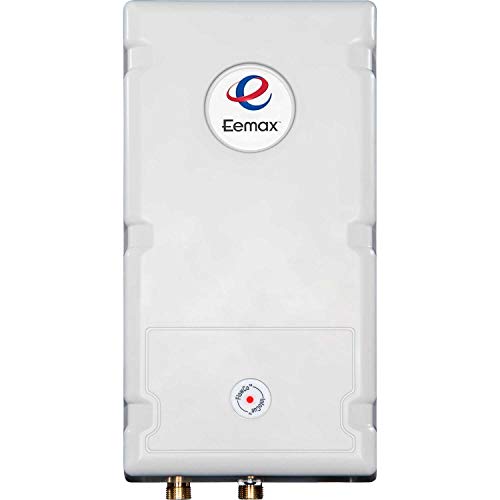
Most compact point-of-use models are engineered for a single fixture rather than whole-home demand. Units like the Eemax EEM12004 or SPEX35 provide localized heating for a handwashing sink or wet bar. Whole-home output generally requires high-capacity models such as the 36-kilowatt HA036240, provided your electrical service can handle the significant amperage.
How does self-modulating technology work in an electric tankless unit?
Self-modulating controls adjust power consumption automatically based on incoming water flow and temperature. Microprocessors measure the incoming flow rate and scale the heating element output up or down to maintain your selected target temperature. This ensures the unit only consumes power while active instead of storing hot water in a standby tank.
What is the main difference between a tankless unit and a mini-tank heater?
A tankless unit activates on demand when flow starts, while a mini-tank stores a small volume of preheated water. For example, the Eemax EMT1 maintains 1.5 gallons of water ready for instant use at a sink via a standard 120-volt plug. Tankless models eliminate standby losses entirely but need higher immediate electrical capacity to warm water instantly.
How does an inline electric water booster assist an existing storage tank?
An inline booster mounts directly to the hot water outlet of an existing tank to increase usable hot water capacity. When the primary tank begins to cool during heavy use, units like the HATB007240 activate and add supplemental heat. This can increase deliverable hot water by up to 45 percent without requiring you to replace your existing water storage system.
How do flow rate and temperature rise affect electric heating performance?
The temperature output directly depends on the incoming water temperature and the gallons per minute passing through the unit. A higher flow rate allows less contact time across the heating elements, resulting in a lower temperature rise. Sizing your best eemax electric heater properly requires checking your local groundwater temperature and fixture flow rate. For broader heating comparisons in small utility spaces, checking a reliable core heating unit guide can clarify electric heating efficiency.


Write Your Review
No reviews yet. Be the first to share your experience!