


Thick soot and baked-on creosote can quickly turn clear hearth glass into an opaque black panel, hiding the warm fire inside a wood stove or insert. Standard household sprays lack the chemistry to break down heavy carbon deposits and may scratch specialized ceramic glass. Applying a dedicated rutland fireplace wood stove glass cleaner restores clear viewing while protecting sensitive high-temperature glass from abrasions. Whether burning seasoned firewood over a heavy-duty lifetime fireplace grate or operating an airtight stove all winter, keeping doors free of corrosive deposits ensures dependable operation.
Different cleaning formulas address distinct buildup types across wood, pellet, and gas units. Heavy creosote glaze requires a non-abrasive conditioning paste that leaves a protective silicone coating, while seasonal ash wipes off easily with an ammonia-free spray. Upgrading hearth maintenance alongside a built-in fireplace insert or traditional stove helps prevent permanent glass clouding without harming surrounds or gaskets.

Pros
- Ammonia-free and non-abrasive formulation safeguards high-temperature ceramic and tempered glass.
- Works on multiple hearth surfaces including cast iron, steel, fireplace grates, and spark screens.
- Substantial 32 fl oz container provides ample supply for regular burning-season upkeep.
- Manufactured in the USA.
Cons
- Heavy multi-season baked creosote deposits may require extended dwell time and repeated applications.
- Surfaces must be allowed to cool completely before applying the liquid cleaner.
The Rutland Fireplace Glass and Hearth Cleaner is an ammonia-free cleaning solution designed specifically for wood-burning fireplace owners, wood stove operators, and hearth managers looking to remove stubborn soot and creosote deposits. High-temperature viewing windows frequently accumulate dark smoke stains that standard household glass cleaners cannot easily dissolve. This 32-ounce formulation provides a targeted chemical solution that loosens carbonaceous buildup without relying on abrasive grit that could compromise delicate hearth glass.
In terms of cleaning performance, the solution focuses on dissolving smoke film, soot haze, and sticky creosote layers that accumulate during everyday wood fires. Because it is non-abrasive, it lifts residue chemically rather than scouring mechanically, which helps prevent micro-scratches on thermal ceramic glass. In addition to primary door glass, the product description indicates broad utility across fireplace grates, spark screens, steel components, and cast iron stove surfaces.
The product comes packaged in a 32 fluid ounce bottle measuring approximately 3.375 by 3.375 by 12.375 inches with a packaged weight of 2.31 pounds. Formulated and made in the USA, the cleaner is engineered for both indoor hearths and outdoor wood-burning appliances. Its ammonia-free chemistry avoids releasing harsh ammonia fumes within enclosed living spaces during indoor seasonal upkeep.
For optimal handling and safety, this cleaner should be applied only after the appliance and glass have cooled completely. Users typically apply the liquid to a rag or the surface directly, allow the solution to penetrate the soot, and wipe clean with a cloth or paper towel. Regular maintenance after heavy burn cycles generally requires less physical effort than tackling months of baked-on creosote, though tougher deposits may warrant repeated applications or longer dwell times.
Realistic limitations center on the physical nature of wood stove glass wear. While the cleaner dissolves creosote and soot, it cannot reverse permanent clouding caused by glass etching, sulfur degradation, or physical pitting from historical overheating. Users should also ensure proper room ventilation during any hearth cleaning routine and verify that their specific stove manufacturer does not mandate specialized proprietary cleansers.
Overall, the Rutland Fireplace Glass and Hearth Cleaner offers a dependable, multi-surface maintenance option for anyone maintaining a wood stove, hearth insert, or traditional fireplace. Its combination of an ammonia-free profile, non-abrasive action, and generous 32-ounce capacity makes it a sensible addition to any regular fireplace care regimen.
Routine application of this 32-ounce cleaner helps maintain clear flame visibility on wood stove and fireplace doors throughout the heating season. Applying the solution onto cold glass prevents thermal shock and allows the active cleaning agents to soften soot films effectively before wiping.
Beyond glass doors, the formula extends to cast iron faces, steel firebox components, fireplace grates, and wire mesh screens. For stubborn outdoor fire pit screens or heavily used indoor grates, applying the solution and letting it penetrate helps loosen baked carbon deposits prior to wiping down with a damp cloth or sponge.
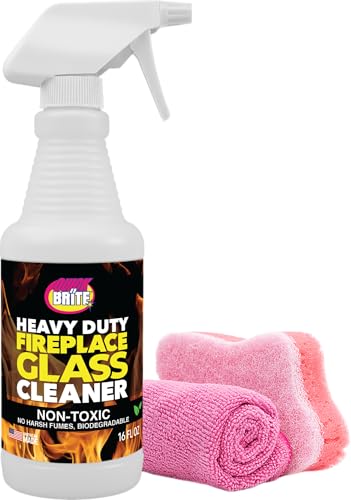
Pros
- Complete kit format provides the cleaner, scrub sponge, and buffing cloth in one package.
- Non-toxic and biodegradable formula cleans effectively without introducing noxious chemical fumes into living areas.
- Gentle on surfaces, avoiding scratches on ceramic glass panels and tempered fireplace doors.
- Easy finger-pump spray bottle allows targeted, mess-free application directly onto soot buildup.
Cons
- Must strictly be applied to completely cool glass to prevent streaking or thermal shock.
- Severely baked-on, multi-season creosote may require several applications and firm scrubbing.
- The 16-ounce volume may deplete quickly for high-frequency wood stove users who clean glass weekly.
The Quick 'n Brite Fireplace Glass Cleaner Kit is a dedicated hearth-maintenance package designed to eliminate stubborn combustion residue from fireplace doors and stove viewing panels. Wood-burning stove owners, gas fireplace operators, and hearth enthusiasts frequently deal with cloudy haze, baked-on soot, and dark creosote buildup that obstructs the view of the fire. This all-inclusive 16-fluid-ounce kit is built specifically for homeowners seeking a non-abrasive, non-toxic solution that comes ready to use right out of the box.
Targeting carbon deposits, smoke residue, ash, and creosote, this specialty formula acts directly on contact to lift discoloration without abrasive scouring agents. The spray works across tempered fireplace glass doors, ceramic stove glass, hearth surrounds, and gas cooktops. To maintain surface safety and prevent haze, the cleaner must only be applied to glass that has cooled down completely. When used on cold glass, the liquid breaks down smoky film and allows users to wipe away grime without scratching or etching the surface.
Each kit includes a 16-ounce spray bottle, a specialized wet scrub sponge, and a terry cloth towel. The spray bottle features an ergonomic finger trigger designed to distribute a uniform mist across vertical glass panels without excessive pooling. The included sponge provides the necessary texture to loosen stubborn carbon deposits without scouring the glass, while the soft terry cloth handles final wiping and buffing to produce a streak-free, clear finish.
Using the cleaner is straightforward and fits easily into routine seasonal maintenance. Users simply spray the solution evenly over cool glass, agitate the area with the damp scrub sponge, and wipe the dissolved soot away with the dry terry cloth. For heavily neglected glass panels with thick, baked-on creosote layers, repeating the process allows the cleaning agents to penetrate successive coats of buildup. Keeping the sponge rinsed and using a clean section of the cloth ensures smooth, smudge-free visibility for your fire viewing area.
While the biodegradable formula avoids harsh fumes, dense multi-season creosote deposits may demand several applications and vigorous elbow grease compared to caustic chemical alternatives. Additionally, the strict requirement to wait until the appliance and glass are entirely cold means maintenance cannot be completed between immediate wood reloads. For high-volume wood burners who clean glass multiple times per week during winter, the 16-ounce volume will deplete faster than larger bulk jugs.
For homeowners looking to restore clear sightlines to their hearth without bringing toxic fumes or abrasive pastes into their living rooms, the Quick 'n Brite Fireplace Glass Cleaner Kit offers practical, reliable performance. Its balanced, biodegradable formula combined with included application tools makes it a complete, convenient maintenance choice for routine wood stove, gas fireplace, and ceramic hearth upkeep.
Only apply the cleaner when the fireplace glass is completely cool to the touch. Applying liquids to hot ceramic or tempered glass can cause rapid temperature changes, streaking, or potential thermal damage.
Spray an even layer of the cleaner across the affected glass using the finger sprayer. Allow the solution a moment to wet and penetrate the soot, ash, or creosote film.
Moisten the included scrub sponge with water and gently work the surface in circular motions to lift carbon deposits without scratching. For heavy creosote accumulation, reapply the spray and repeat the scrubbing step as needed.
Wipe the dissolved residue clean using the included terry cloth towel to eliminate streaks and leave a clear, smudge-free finish. Rinse the sponge and wash the cloth after use to keep them ready for future maintenance.

Pros
- Modifies tough, glazed creosote deposits into loose ash that brushes away easily
- Heat activates at an achievable operational flue threshold of 265 degrees Fahrenheit
- Broad compatibility with wood stoves, inserts, free-burning hearths, and catalytic combustors
- Supplied with a convenient 1-ounce scoop for consistent dosage
Cons
- Loosens deposits chemically but does not eliminate the need for mechanical chimney sweeping
- Requires an active fire hot enough to sustain the 265 degree Fahrenheit activation temperature
- Packaging details note minor descriptive text variations regarding tub size and scoop yield
Rutland Creosote Remover is a heat-activated chemical maintenance compound engineered to address stubborn, tar-like flue deposits in solid-fuel venting systems. Supplied in a 32-ounce (2-pound) container, this powder cleaner targets homeowners, cabin owners, and regular wood burners using airtight stoves, wood-burning fireplace inserts, freestanding wood heaters, or traditional open masonry fireplaces.
Creosote buildup occurs naturally as unburned wood byproducts condense along cooler flue walls, often forming a dense, sticky glaze that resists standard wire brushing. This treatment penetrates that glazed layer and alters its chemical structure, turning it into a dry, powdery ash that releases its grip on chimney liners. The compound activates at 265 degrees Fahrenheit, releasing active vapors that travel up the flue pathway alongside the natural draft of the fire.
Appliance safety is a central consideration when adding chemical agents to a firebox, and Rutland specifies this formula as non-damaging to catalytic converters. Owners of modern, high-efficiency catalytic wood stoves can introduce this remover without risking degradation to sensitive combustor honeycomb cells. It is equally compatible with metal chimneys, masonry flues, and flexible stainless-steel chimney liners.
Packaged in a canister measuring 5 x 5 x 4.88 inches, the container stores easily on a hearth shelf or in a utility cabinet. Dosing is straightforward using the included 1-ounce scoop, which allows operators to sprinkle the powder over an established bed of glowing embers or burning logs. Routine applications during peak burning months help keep hard glaze from compounding into heavy, dangerous layers.
While this chemical cleaner significantly loosens baked-on creosote, it is not a standalone replacement for regular physical flue maintenance. Loose debris must still be cleared with a chimney brush, and the appliance still requires seasonal inspections to ensure clear passages and flue integrity. Users should also ensure the fire reaches the 265-degree Fahrenheit threshold so the powder vaporizes properly rather than remaining inert in the bottom ash pan.
For owners of wood-burning appliances looking to reduce the effort required during routine chimney cleaning, Rutland Creosote Remover provides a reliable, catalytic-safe method for breaking down heavy glaze. It serves as an effective preventive maintenance tool when incorporated alongside dry seasoned firewood and periodic mechanical sweepings.
Routine application of this granular cleaner helps keep chimney liners and stovepipes manageable throughout heavy winter heating periods. Adding a measured 1-ounce scoop onto a bed of hot coals releases vapors that break the bond of sticky creosote deposits along the chimney walls.
Always verify good flue draft and maintain fire temperatures at or above the 265-degree Fahrenheit threshold during application. After treatments have broken down glazed deposits, conduct regular mechanical brushing to sweep out the fallen, powdery ash from the stove baffle, smoke shelf, and flue base.
Rutland Creosote Remover is formulated for broad use across wood-fueled hearth products, including airtight wood stoves, factory-built wood fireplaces, masonry hearths, and wood-burning inserts.
The formulation is specifically designated as safe for systems equipped with catalytic converters, ensuring secondary combustion units and exhaust pathways remain fully functional without chemical fouling.

Pros
- All-in-one kit provides dedicated scraping and scrubbing accessories tailored for layered soot removal
- Odor-free, non-harsh formula prevents overpowering chemical fumes in indoor living spaces
- Multi-surface versatility covers traditional fireplace glass, wood stoves, and ceramic kitchen cooktops
- Made in the USA by an established specialty cleaner company
Cons
- Restricted strictly to fully cooled glass surfaces, preventing spot cleanups while a fire is burning
- Heavily baked, multi-season creosote scaling may require considerable manual scraping and repeat treatments
- The 16-ounce spray capacity may deplete quickly during peak winter burning seasons with frequent maintenance
The Quick 'n Brite Fireplace Glass Cleaner Kit is a dedicated hearth maintenance set designed for wood-burning fireplace owners, wood stove operators, and gas fireplace users dealing with obscured viewing glass. Over time, wood fires and prolonged stove use leave a stubborn coating of ash, smoke film, and baked-on creosote that standard household window sprays cannot dissolve. This 16-ounce kit targets those heavy carbon accumulations directly, pairing a specialized cleaning solution with purpose-made tools to restore transparent firebox views.
Cleaning performance relies on breaking down carbon deposits without inflicting mechanical or chemical damage on tempered or ceramic fireplace glass. Rather than relying solely on a spray, this package includes a multi-tiered mechanical cleaning approach: a handheld scraper tool to dislodge thick, crusty creosote scale, a heavy scrubber sponge to break surface tension, a fine melamine sponge for residual hazing, and a microfiber towel for the final smudge-free polish. The cleaner is also formulated for ceramic-glass cooktops, hearths, and oven doors, offering practical utility beyond the winter heating season.
Formulation quality stands out for homeowners sensitive to indoor air quality. Quick 'n Brite uses an earth-conscious formula free from harsh chemical odors, parabens, and animal products. Unlike ammonia-heavy or caustic oven cleaners that release intense fumes into the family room, this spray cleans without requiring immediate room evacuation or aggressive ventilation. Manufactured in the USA by a family-owned company established in 1952, the components are curated to protect specialty glass surfaces from scratching when used properly.
Proper routine maintenance with this kit requires following specific temperature guidelines. The manufacturer specifies that this cleaner and its accompanying tools are safe for cold surfaces only. Applying the solution to hot or warm fireplace glass can cause rapid evaporation, surface staining, or thermal shock to the glass panel. Homeowners must allow the firebox and door assembly to cool completely before misting the surface, working the residue with the wet sponges or scraper, and wiping dry with the microfiber cloth.
A realistic limitation of the product involves the effort required for severely neglected installations. Extremely dense, multi-year creosote buildup will generally require multiple applications and steady manual effort with the scraper rather than a simple wipe-away process. Furthermore, homeowners operating primary-heat wood stoves may find that 16 fluid ounces goes quickly over a long winter. For routine maintenance and restoring clarity to cloudy fireplace and stove doors, this American-made kit provides a practical, fume-free solution that simplifies seasonal hearth upkeep.
Safe and effective fireplace glass cleaning depends on strict cold-surface application. Never spray cleaning solutions or apply scraper tools to hot or warm fireplace glass, as temperature extremes can compromise the structural integrity of the glass and cause the cleaner to evaporate before dissolving residues.
For optimal results on heavy creosote, mist the cold glass evenly with the finger sprayer and allow the formula a few moments to penetrate the carbon crust. Use the scraper tool held flat against the glass to peel away thick scaling, follow with the wet scrubber or melamine sponge to lift remaining soot, and finish with the dry microfiber cloth for a streak-free view.

Pros
- Micro-scrubbers cut through tough creosote and haze without damaging ceramic stove glass
- Silicone conditioning layer slows down future soot accumulation between burn sessions
- Versatile use across wood stove doors, gas fireplace windows, and ceramic cooktops
- Compact 8-ounce bottle is easy to handle and store near the hearth
Cons
- Heavily baked-on creosote may require multiple applications and firm manual buffing
- Small 8-ounce volume may deplete quickly for households burning wood daily through the winter
- Must only be applied to completely cool glass surfaces to prevent streaking or thermal shock
Rutland Fireplace Glass Cleaner is an 8-ounce conditioning cleaner engineered specifically for homeowners maintaining wood-burning stoves, fireplace inserts, and gas hearth appliances. Over weeks of burning seasoned firewood or operating a gas flame, combustion residue, airborne particles, and sulfur minerals inevitably cloud the viewing window. This conditioning polish offers a targeted cleaning approach for anyone frustrated by stubborn soot that ordinary household glass sprays cannot remove.
The formula relies on built-in micro-scrubbers that abrade carbonized soot and baked-on creosote deposits mechanically while safeguarding the integrity of ceramic stove glass. Unlike standard window cleaners that run down the pane and fail to cut through glazed tar, this lotion-style cleaner adheres to the glass surface, allowing the cleaning agents to soften hardened buildup. Users can tackle opaque black deposits on high-output wood stoves as well as milky white film on sealed direct-vent gas units.
A standout characteristic of this cleaner is the protective silicone barrier it leaves behind after buffing. Rather than simply stripping the surface bare, the conditioning agent coats microscopic surface pores with an invisible film. This layer inhibits fresh creosote and combustion gases from baking directly into the glass, making subsequent cleaning sessions significantly faster and less labor-intensive throughout the heating season.
Application is straightforward and requires no specialized tools beyond a clean cloth or paper towel. The bottle measures 1.5 by 2.75 by 6.88 inches and weighs half a pound, making it comfortable to grasp and easy to dispense onto cool glass. Beyond fireplace use, the manufacturer notes compatibility with ceramic and electric cooktops, providing functional versatility in the kitchen for scorched food spills and mineral rings.
Buyers should keep realistic maintenance expectations in mind regarding heavily neglected firebox windows. Glass that has accumulated multiple seasons of rock-hard glazed creosote will likely require repeated applications, gentle dwell time, and firm elbow grease rather than an effortless single wipe. Additionally, users must confirm their glass is cool to the touch before application to avoid rapid drying, excessive streaking, or sudden temperature stress on the pane.
For owners of wood-burning appliances or glass-fronted gas fireplaces seeking a dedicated maintenance product that cuts through tough combustion film without scratching, this Rutland conditioning cleaner remains a practical, cost-conscious staple for the hearth care cabinet.
Routine cleaning is essential for maintaining clear firebox visibility and preventing permanent etching caused by sulfur and acidic wood smoke residues. Applying Rutland Fireplace Glass Cleaner every few weeks during peak burning periods prevents soot from baking into a dense, rock-hard glaze that becomes difficult to eliminate.
Always verify that the stove or fireplace is fully extinguished and that the glass has returned to room temperature before beginning. Squeeze a modest amount of cleaner onto a dry cloth or paper towel, rub thoroughly over the soiled ceramic glass using circular motions, allow the paste to haze slightly, and buff off with a second clean cloth. Store the 8-ounce container upright in a cool, dry area away from direct heat sources.

Pros
- Convenient two-pack provides a full 64 fl oz total volume for heavy winter heating seasons.
- Formulated specifically for fireplace glass and hearth surfaces rather than general household cleaners.
- Helps remove stubborn baked-on smoke residue and soot film from stove windows.
- Routine cleaning keeps decorative fire views clear and bright.
Cons
- Product data does not specify exact spray nozzle hardware or included applicator accessories.
- Heavy baked-on creosote may require multiple applications or specific non-abrasive scrubbing pads.
- Buyers should verify surface compatibility on sensitive hearth stone, unsealed masonry, or custom finishes before widespread use.
Rutland Fireplace Glass and Hearth Cleaner is a dedicated maintenance formula sold in a two-pack of 32 fluid ounce bottles, created specifically for fireplace owners needing to remove baked-on soot, creosote film, and smoke stains. It is well-suited for homeowners operating wood-burning stoves, fireplace inserts, gas fireplaces, or traditional masonry hearths where clear door glass and neat surrounds are desired.
When heating appliances run through the cold months, carbon, ash, and creosote naturally condense on cooler surfaces, obscuring the view of the flames. This cleaner is formulated to break down stubborn, heat-baked residue on stove glass and hearth materials more effectively than standard multi-surface household cleaners. Regular removal of these deposits not only maintains the visual ambiance of your hearth but also prevents acidic residues from etching into the glass surface over time.
The package includes two 32-ounce bottles, supplying 64 total ounces of cleaning solution. This quantity offers practical value for regular maintenance, ensuring homeowners have ample cleaner on hand throughout high-use fall and winter heating seasons. The generous volume reduces the need for frequent reorders during peak burning months.
For routine use, fireplace glass should always be completely cool to the touch before applying any cleaning solution to prevent thermal shock or fumes. Applying the liquid to the affected glass or hearth area with a non-abrasive cloth or pad helps lift carbon buildup without scratching protective coatings or tempered glass surfaces. Rinsing or wiping clean with a damp cloth leaves viewing windows ready for the next fire.
While specialized fireplace cleaners excel at dissolving typical soot and smoke residue, extremely thick or crystallized creosote buildup from improper burning may require multiple applications or gentle mechanical agitation. In addition, because natural stone, porous brick, and specialty mantel materials react differently to liquid cleaners, testing on an inconspicuous spot is sensible before broad application across hearth extensions.
This two-pack of Rutland glass and hearth cleaner represents a practical, dependable addition to any hearth maintenance kit. Fireplace and wood-stove owners looking to maintain clear flame viewing and neat hearth surrounds without resorting to harsh abrasive tools will appreciate the dedicated formulation and ample multi-pack volume.
Always ensure that your fireplace glass, stove doors, and surrounding hearth are completely cold before beginning any cleaning routine. Applying liquid cleaners to hot or warm glass can cause sudden thermal shock, potentially cracking tempered or ceramic glass panels.
Pair this cleaner with soft microfiber towels, paper towels, or designated non-scratch scouring pads. Avoid razor blades, steel wool, or abrasive scouring powders, which can scratch stove glass and create micro-grooves that collect more soot over time.
When cleaning hearth extensions made of unsealed slate, marble, or polished stone, conduct a small spot test in an out-of-the-way corner to verify that the cleaner does not alter the finish or leave discoloration.

Pros
- Formulated with gentle micro-scrubbers that strip creosote and soot without scratching sensitive ceramic glass
- Leaves a protective silicone coating that repels future carbon buildup and speeds up subsequent cleanings
- Two-pack of 8-ounce bottles offers practical seasonal value for frequent wood-burning stove and insert users
- USA-made formulation suitable for high-heat fireplace glass doors and domestic ceramic stovetops alike
Cons
- Formulated specifically for ceramic glass, so users must verify suitability before applying to standard tempered glass or specialized coatings
- Requires manual buffing and elbow grease for heavy, multi-season creosote accumulation
- Conditioning cleaner requires thorough wiping with clean towels to prevent lingering streaks or hazy residue
Rutland Conditioning Glass Cleaner is a specialized high-temperature cleaning solution engineered specifically for ceramic fireplace glass, wood stove viewing doors, and domestic ceramic cooktops. This two-pack of 8-ounce bottles suits wood-burning fireplace owners, stove operators, and hearth insert users who frequently deal with baked-on soot, creosote, and cloudy carbon film. It targets homeowners who want to maintain clear visibility of their firebox while avoiding harsh abrasives that could permanently mar expensive ceramic panels.
The core advantage of this conditioning cleaner is its dual-action cleaning and protecting chemistry. Fine micro-scrubbers break up stubborn, heat-baked creosote and stubborn ash residue without scratching ceramic surfaces. Beyond merely lifting grime, the formula leaves behind an ultra-thin layer of RTV silicone. This conditioning barrier fills microscopic surface imperfections on the ceramic glass, reducing the rate at which fresh soot bonds to the surface and making routine follow-up wipedowns noticeably faster.
Glass on wood stoves and high-efficiency fireplace inserts is typically pyroceramic rather than standard tempered glass, requiring cleaners that will not scratch or chemically degrade under extreme heat cycles. Rutland manufactures this formula in the USA specifically for high-temperature hearth installations. While tough on carbon deposits, the conditioning paste is gentle enough for everyday ceramic cooktops, giving it practical year-round versatility beyond the active winter burning season.
Applying the cleaner is straightforward and integrates easily into regular hearth maintenance routines. Users apply a small amount to cool glass with a dry cloth or paper towel, scrub away the soot buildup, and buff clean with a fresh rag. For safety and optimal results, glass must be completely cold before application, as cleaning hot glass can cause thermal shock or vaporize cleaning agents prematurely.
While highly effective on ceramic viewing panels, buyers should verify their exact fireplace door glass type before use. The formula is specifically marketed for ceramic glass and may not be intended for decorative plated trims, tinted glass, or certain specialized coated panels. Additionally, severely neglected doors with years of vitrified glaze may require multiple passes or soaking time, as no conditioning polish instantly dissolves deep, heavy creosote scale without some manual effort.
For wood stove owners and fireplace insert users looking to keep fire views crisp, the Rutland Conditioning Glass Cleaner two-pack provides a dependable, surface-safe solution. Its combination of scratch-free micro-scrubbers and lingering silicone protection cuts down on hearth maintenance time throughout the burning season, making it a reliable addition to any wood burner's cleaning kit.
Always allow the fireplace or wood stove to cool completely before applying Rutland Conditioning Glass Cleaner. Applying liquid cleaners or polishes to hot or warm glass can cause severe thermal shock, potentially cracking the ceramic panel, or cause the formula to dry too quickly and create heavy hazing.
Shake the bottle thoroughly before dispensing. Pour a modest amount onto a dry paper towel, cotton cloth, or dedicated cleaning pad, then rub the ceramic glass surface in circular motions over soot and creosote stains. The embedded micro-scrubbers will gradually break down baked-on carbon without causing micro-abrasions on the glass.
Once the deposits have lifted, use a separate clean, dry towel to buff the glass until it is completely transparent and free of film. The remaining microscopic layer of RTV silicone will stay bonded to the surface, creating an invisible shield that helps prevent future soot particles from baking directly into the ceramic material during your next fire.
Frequently Asked Questions
How does a conditioning cleaner differ from a standard hearth spray?
Conditioning cleaners use micro-scrubbers in a thick paste to buff away baked-on creosote without scratching ceramic panels. Standard sprays dissolve loose soot and light smoke on contact using liquid surfactants. Conditioning pastes also leave a micro-thin silicone layer over glass pores, resisting future soot buildup and speeding up routine maintenance.
Can you apply rutland fireplace wood stove glass cleaner while the glass is warm?
No, apply rutland fireplace wood stove glass cleaner only to completely cold glass. Thermal shock from applying liquid to hot glass can cause fractures, even on heat-rated ceramic panels. Room-temperature formulas also dry prematurely on hot surfaces, leaving stubborn streaks. Always allow your indoor fireplace hearth to cool before cleaning.
Will fireplace glass cleaner damage door gaskets or painted cast iron?
Drying overspray or cleaner residue can stiffen fiberglass rope gaskets and discolor painted cast iron over time. Liquid cleaners soaking into door gaskets may degrade adhesives and compromise airtight combustion seals. Spray cleaning solutions onto a cloth or sponge rather than directly onto the door, wiping away accidental spills on metal surfaces immediately.
How does a chemical creosote treatment differ from door glass cleaner?
Chemical creosote treatments target the flue and stove interior rather than door glass. Heat-activated granular formulas convert sticky chimney tar into dry ash that sweeps away easily. A rutland fireplace wood stove glass cleaner directly cleans door panels. Both work together to keep wood-burning appliances clean and safe in 2026.
How often should wood stove glass be cleaned during winter?
Cleaning glass every one to two weeks prevents light soot from baking into hardened creosote. Burning dry, seasoned wood and maintaining adequate draft airflow minimizes buildup via stove air-wash systems. Wiping panels down promptly when haze appears keeps ceramic glass transparent and prevents stubborn mineral etching.




Write Your Review
No reviews yet. Be the first to share your experience!