


Thick creosote and hazy mineral deposits can turn an inviting fireplace into an eyesore in just a few burning sessions. Standard window sprays won’t cut through baked-on carbon, and abrasive scrub pads risk permanently scratching tempered or ceramic glass doors. Investing in a specialized rutland fireplace cleaner restores firebox visibility while protecting delicate glass coatings. Pair your seasonal cleaning supplies with a reliable fireplace fire tools set to manage wood safely and keep stray ashes from accumulating against the hearth door.
Matching the formula to your specific heating setup is essential for proper surface care. Gas logs often leave a stubborn white sulfur film across glass panels, while wood-burning stoves bake layers of oily pitch into the surface. Dedicated conditioning cleaners strip away grime and deposit a microscopic silicone barrier that slows down future soot accumulation. For thorough maintenance that addresses both chimney flue safety and firebox hygiene, combining glass care with mechanical solutions like a fireplace cleaner ensures smooth airflow and clean burns all winter.

Pros
- Ammonia-free and non-abrasive formulation safeguards high-temperature ceramic and tempered glass.
- Works on multiple hearth surfaces including cast iron, steel, fireplace grates, and spark screens.
- Substantial 32 fl oz container provides ample supply for regular burning-season upkeep.
- Manufactured in the USA.
Cons
- Heavy multi-season baked creosote deposits may require extended dwell time and repeated applications.
- Surfaces must be allowed to cool completely before applying the liquid cleaner.
The Rutland Fireplace Glass and Hearth Cleaner is an ammonia-free cleaning solution designed specifically for wood-burning fireplace owners, wood stove operators, and hearth managers looking to remove stubborn soot and creosote deposits. High-temperature viewing windows frequently accumulate dark smoke stains that standard household glass cleaners cannot easily dissolve. This 32-ounce formulation provides a targeted chemical solution that loosens carbonaceous buildup without relying on abrasive grit that could compromise delicate hearth glass.
In terms of cleaning performance, the solution focuses on dissolving smoke film, soot haze, and sticky creosote layers that accumulate during everyday wood fires. Because it is non-abrasive, it lifts residue chemically rather than scouring mechanically, which helps prevent micro-scratches on thermal ceramic glass. In addition to primary door glass, the product description indicates broad utility across fireplace grates, spark screens, steel components, and cast iron stove surfaces.
The product comes packaged in a 32 fluid ounce bottle measuring approximately 3.375 by 3.375 by 12.375 inches with a packaged weight of 2.31 pounds. Formulated and made in the USA, the cleaner is engineered for both indoor hearths and outdoor wood-burning appliances. Its ammonia-free chemistry avoids releasing harsh ammonia fumes within enclosed living spaces during indoor seasonal upkeep.
For optimal handling and safety, this cleaner should be applied only after the appliance and glass have cooled completely. Users typically apply the liquid to a rag or the surface directly, allow the solution to penetrate the soot, and wipe clean with a cloth or paper towel. Regular maintenance after heavy burn cycles generally requires less physical effort than tackling months of baked-on creosote, though tougher deposits may warrant repeated applications or longer dwell times.
Realistic limitations center on the physical nature of wood stove glass wear. While the cleaner dissolves creosote and soot, it cannot reverse permanent clouding caused by glass etching, sulfur degradation, or physical pitting from historical overheating. Users should also ensure proper room ventilation during any hearth cleaning routine and verify that their specific stove manufacturer does not mandate specialized proprietary cleansers.
Overall, the Rutland Fireplace Glass and Hearth Cleaner offers a dependable, multi-surface maintenance option for anyone maintaining a wood stove, hearth insert, or traditional fireplace. Its combination of an ammonia-free profile, non-abrasive action, and generous 32-ounce capacity makes it a sensible addition to any regular fireplace care regimen.
Routine application of this 32-ounce cleaner helps maintain clear flame visibility on wood stove and fireplace doors throughout the heating season. Applying the solution onto cold glass prevents thermal shock and allows the active cleaning agents to soften soot films effectively before wiping.
Beyond glass doors, the formula extends to cast iron faces, steel firebox components, fireplace grates, and wire mesh screens. For stubborn outdoor fire pit screens or heavily used indoor grates, applying the solution and letting it penetrate helps loosen baked carbon deposits prior to wiping down with a damp cloth or sponge.

Pros
- Micro-scrubbers cut through tough creosote and haze without damaging ceramic stove glass
- Silicone conditioning layer slows down future soot accumulation between burn sessions
- Versatile use across wood stove doors, gas fireplace windows, and ceramic cooktops
- Compact 8-ounce bottle is easy to handle and store near the hearth
Cons
- Heavily baked-on creosote may require multiple applications and firm manual buffing
- Small 8-ounce volume may deplete quickly for households burning wood daily through the winter
- Must only be applied to completely cool glass surfaces to prevent streaking or thermal shock
Rutland Fireplace Glass Cleaner is an 8-ounce conditioning cleaner engineered specifically for homeowners maintaining wood-burning stoves, fireplace inserts, and gas hearth appliances. Over weeks of burning seasoned firewood or operating a gas flame, combustion residue, airborne particles, and sulfur minerals inevitably cloud the viewing window. This conditioning polish offers a targeted cleaning approach for anyone frustrated by stubborn soot that ordinary household glass sprays cannot remove.
The formula relies on built-in micro-scrubbers that abrade carbonized soot and baked-on creosote deposits mechanically while safeguarding the integrity of ceramic stove glass. Unlike standard window cleaners that run down the pane and fail to cut through glazed tar, this lotion-style cleaner adheres to the glass surface, allowing the cleaning agents to soften hardened buildup. Users can tackle opaque black deposits on high-output wood stoves as well as milky white film on sealed direct-vent gas units.
A standout characteristic of this cleaner is the protective silicone barrier it leaves behind after buffing. Rather than simply stripping the surface bare, the conditioning agent coats microscopic surface pores with an invisible film. This layer inhibits fresh creosote and combustion gases from baking directly into the glass, making subsequent cleaning sessions significantly faster and less labor-intensive throughout the heating season.
Application is straightforward and requires no specialized tools beyond a clean cloth or paper towel. The bottle measures 1.5 by 2.75 by 6.88 inches and weighs half a pound, making it comfortable to grasp and easy to dispense onto cool glass. Beyond fireplace use, the manufacturer notes compatibility with ceramic and electric cooktops, providing functional versatility in the kitchen for scorched food spills and mineral rings.
Buyers should keep realistic maintenance expectations in mind regarding heavily neglected firebox windows. Glass that has accumulated multiple seasons of rock-hard glazed creosote will likely require repeated applications, gentle dwell time, and firm elbow grease rather than an effortless single wipe. Additionally, users must confirm their glass is cool to the touch before application to avoid rapid drying, excessive streaking, or sudden temperature stress on the pane.
For owners of wood-burning appliances or glass-fronted gas fireplaces seeking a dedicated maintenance product that cuts through tough combustion film without scratching, this Rutland conditioning cleaner remains a practical, cost-conscious staple for the hearth care cabinet.
Routine cleaning is essential for maintaining clear firebox visibility and preventing permanent etching caused by sulfur and acidic wood smoke residues. Applying Rutland Fireplace Glass Cleaner every few weeks during peak burning periods prevents soot from baking into a dense, rock-hard glaze that becomes difficult to eliminate.
Always verify that the stove or fireplace is fully extinguished and that the glass has returned to room temperature before beginning. Squeeze a modest amount of cleaner onto a dry cloth or paper towel, rub thoroughly over the soiled ceramic glass using circular motions, allow the paste to haze slightly, and buff off with a second clean cloth. Store the 8-ounce container upright in a cool, dry area away from direct heat sources.
Pros
- Ammonia-free formulation prevents chemical damage to specialized ceramic fireplace glass.
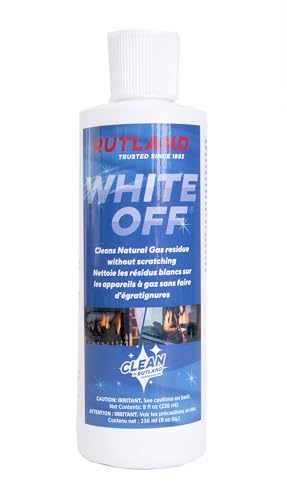
- Effectively removes white mineral haze without scratching or micro-pitting the glass.
- Versatile formula works on gas fireplace doors, kitchen cooktops, stainless steel, and fiberglass.
- Convenient 8 fl oz bottle format is easy to store alongside standard hearth maintenance supplies.
Cons
- The 8-fluid-ounce bottle may require frequent replenishment for homeowners managing multiple large glass enclosures.
- Formulated primarily for gas residue and white film rather than heavy wood-burning creosote or baked-on tar.
- Requires manual buffing and elbow grease to fully lift stubborn, long-standing glass haze.
Rutland White Off Gas Fireplace Glass Cleaner Cream is a specialized hearth maintenance product tailored for homeowners and property managers dealing with hazy, cloudy deposits on gas fireplace doors. Gas logs and direct-vent systems frequently deposit a persistent white mineral film on ceramic glass enclosures over time. This cleaner provides a targeted formula engineered to dissolve that specific byproduct and restore clear viewing of the flames without compromising the integrity of the glass.
Performance centers on lifting stubborn mineral deposits without causing physical surface degradation. Standard household window cleaners often fail against gas fireplace haze or contain chemicals that harm high-temperature glass. According to the manufacturer, this cleaning cream removes white residue without scratching or micro-pitting the surface. Its compatibility extends beyond fireplace glass as well, offering safe cleaning action on smooth cooktops, stainless steel trim, and fiberglass fixtures around the home.
The composition is intentionally ammonia-free, which is critical for maintaining modern gas fireplace installations. Ceramic glass panels used in gas fireplaces can suffer etching and permanent clouding when exposed to standard ammonia-based window sprays under heat cycles. The white cream formulation clings to vertical glass panels better than thin liquid sprays, allowing the cleaner to work into the residue rather than immediately running down into bottom gaskets or frame channels.
Daily handling and application remain simple thanks to the compact container specifications. The 8-fluid-ounce bottle measures 1.5 by 2.75 by 6.875 inches and weighs approximately 0.7 pounds, making it easy to store in a utility closet or alongside standard fireplace maintenance gear. Routine upkeep generally involves applying the cream to completely cooled glass, working it across the cloudy film, and wiping the residue away with a clean cloth according to package directions before re-firing the fireplace.
Buyers should recognize specific limitations inherent to this maintenance cream. While it targets the white chemical residue typical of natural gas and propane appliances, the product description does not cite effectiveness against the heavy, baked-on creosote commonly produced by wood-burning stoves. Homeowners with expansive multi-sided glass doors may also find that an 8-ounce supply depletes quickly after several thorough seasonal cleanings, and deep-set haze may require repeated applications with moderate manual buffing.
For gas fireplace and gas insert owners seeking to eliminate white cloudy buildup without risking surface scratches or chemical etching, Rutland White Off provides a reliable, surface-safe solution. Its ammonia-free chemistry and multi-surface versatility make it a practical, budget-friendly addition to any seasonal hearth care regimen.
Gas fireplace glass panels should always be completely cold to the touch before applying any cleaning product. Applying liquid or cream cleaners to warm or hot ceramic glass risks thermal shock, rapid drying, or chemical etching.
Because Rutland White Off does not contain ammonia, it avoids the chemical breakdown and discoloration that standard household glass cleaners can cause on ceramic hearth glass. Users should follow the manufacturer instructions by applying a modest amount of cream with a soft dry cloth, buffing the white residue away, and wiping the glass clean before relighting the gas burner.

Pros
- Requires zero scrubbing or wiping to clear carbon deposits from logs
- Safe for both vented and vent-free setups running on natural gas or propane
- Non-damaging formula will not harm burners or discolor compatible log sets
- Convenient 16 oz spray bottle allows quick, direct application inside the firebox
Cons
- Cannot be used on white logs or ceramic fiber logs
- Requires verifying your exact log material before use to avoid cosmetic damage
The Rutland Gas Log Soot Remover is a specialized 16-ounce maintenance spray engineered to clear carbon deposits and dark exhaust buildup from gas fireplace logs. This cleaner serves homeowners and renters with permitted gas appliances who want to refresh the look of their hearth without disassembling the firebox, lifting out heavy log stacks, or scouring fragile surfaces by hand.
Functioning as a spray-on, no-wipe solution, this product dissolves soot accumulation without requiring abrasive brushes or physical contact. According to the manufacturer, the formula cleans the log exterior while ensuring burner ports remain completely unharmed. Regular application helps keep log surfaces looking renewed while maintaining the clean visual presentation of your gas flame display.
Appliance compatibility includes both vented and vent-free units powered by natural gas or liquid propane. However, log material compatibility has a critical restriction: the manufacturer states explicitly that this cleaner must not be used on white logs or fiber logs. Homeowners should verify their fireplace media type prior to use, as lightweight ceramic fiber materials require alternative care and may react poorly to liquid cleaners.
The product comes in an upright 16-ounce spray bottle measuring 2.75 by 2.75 by 10.25 inches and weighing about one pound. Its compact profile makes it easy to maneuver directly into tight firebox openings to target sooted crevices. Routine seasonal maintenance is straightforward because you simply spray the affected logs without disturbing burner placement or adjusting gas controls.
The primary limitation is the strict restriction against fiber and white log materials, which means buyers must know what their logs are made of before purchasing. It is also designed specifically for soot removal on logs rather than cleaning firebox glass doors or masonry firebrick.
For owners of compatible refractory ceramic or concrete gas logs in natural gas or propane fireplaces, this USA-made Rutland cleaner offers a practical, low-effort maintenance solution that clears soot buildup and keeps the firebox looking pristine.
Using this cleaner requires no scrubbing, wiping, or washing after application. The spray is applied directly to the sooted areas of your gas logs, allowing the formula to dissolve carbon buildup cleanly without abrasive contact that could scratch or chip the log finish.
Verify that your fireplace uses standard, compatible gas logs before spraying. The manufacturer explicitly prohibits use on white logs or fiber-based logs, as these sensitive materials can absorb moisture or suffer discoloration. It remains fully safe for burners on both vented and vent-free liquid propane and natural gas fireplaces.

Pros
- Nonabrasive gel clings to vertical masonry surfaces to break down soot and creosote without surface damage
- Includes an ergonomic scrub brush to work the gel deep into porous brick and rough stone crevices
- Gentle, odor-free formula avoids harsh chemical fumes in enclosed living rooms and family areas
- Versatile multi-surface compatibility across brick, river rock, fieldstone, tile, and marble
Cons
- 16-ounce bottle volume may require multiple purchases for oversized or floor-to-ceiling masonry surrounds
- Decades of heavily baked-on, glazed creosote deposits will likely require multiple applications and patience
- Requires a separate clean water spray bottle and wiping towels that are not included in the package
Quick 'n Brite Fireplace Gel Cleaner is a specialty hearth maintenance solution packaged with a dedicated scrub brush, designed for homeowners, remodelers, and property managers dealing with carbon-blackened fireplace surrounds. Unlike standard spray cleaners that run down masonry before penetrating, this pink gel formula clings to vertical brick, stacked stone, rock, tile, and marble surfaces. It is tailored specifically for seasonal wood-burning fireplace owners and gas hearth owners who need to lift ash and soot residue without introducing harsh chemical odors into the living space.
Performance centers on chemical breakdown rather than aggressive mechanical abrasion. The nonabrasive gel dissolves embedded soot, creosote film, and ash grime, allowing the bristles of the included scrub brush to agitate porous mortar joints and textured stone faces safely. Because it is nonabrasive, it can be applied to delicate surfaces like polished marble and glazed hearth tile without creating micro-scratches that dull the finish or trap future soot deposits.
The formulation highlights indoor usability and safety. Quick 'n Brite formulates this cleaner without harsh chemical odors, parabens, or animal byproducts, meaning users do not need to wear respirators or heavy protective gloves during standard indoor cleaning. This makes routine hearth maintenance much less intrusive in family rooms and open-concept spaces where chemical fumes from solvent-based cleaners typically linger for days.
Using the kit is straightforward and requires minimal additional hardware. The process involves wetting the included brush with water, dipping or applying the gel directly onto the bristles, and scrubbing the soiled fireplace face. To remove the dissolved grime, the surface is sprayed with water from a standard spray bottle and wiped dry using a terry-cloth or microfiber towel. The compact 1-pound bottle measures approximately 5 by 3.5 by 7.5 inches, making it easy to store in a hearth accessory cabinet or utility closet between seasons.
Realistic limitations involve coverage area and stain severity. A 16-ounce bottle is well-suited for standard fireplace openings and hearth extensions, but homeowners dealing with full-height stone chimneys or wide brick feature walls will likely exhaust the bottle quickly. Furthermore, while the gel swiftly lifts routine soot and surface creosote, heavily vitrified or decades-old glazed creosote on antique wood-burning fireplaces may require several treatment cycles along with extended dwell times.
For anyone seeking to restore blackened fireplace brickwork, hearth pads, or stone surrounds without harsh odors or surface damage, Quick 'n Brite Fireplace Gel Cleaner provides reliable, mess-free performance. It represents a practical, cost-effective investment in seasonal fireplace upkeep, offering American homeowners an easy way to brighten their living room centerpieces ahead of cozy winter evenings.
Quick 'n Brite Fireplace Gel Cleaner relies on a wet-application and wipe-away process designed to trap soot within the gel rather than letting black runoff stain nearby carpets or wood flooring. Before starting, place a drop cloth or old towel beneath the work area to catch any dislodged ash clumps or dripping water.
Dampen the included scrub brush with warm water, work the gel directly into the bristles, and apply it in circular motions across the stained masonry or tile. For porous materials such as coarse brick or river rock, allowing the gel to sit for a few minutes helps loosen deep creosote deposits before light agitation. Once scrubbed, mist the treated area with clean water using a spray bottle, then firmly wipe away the lifted residue using a damp terry-cloth towel or microfiber rag, rinsing the cloth frequently to avoid redepositing black soot.
Fireplace Maintenance and Hearth Cleaning FAQs
Hearth maintenance requires matching your cleaning routine to your specific fuel source and surface materials. Rather than applying generic household cleaners that risk clouding thermal glass, selecting the proper rutland fireplace cleaner keeps firebox components looking sharp and operating safely throughout 2026.
Can standard household glass spray clean fireplace glass doors?
No, standard household glass sprays containing ammonia should never be applied to fireplace glass. Ammonia reacts with high-temperature ceramic glass and bakes into the surface during subsequent fires, causing irreversible clouding. Using an ammonia-free rutland fireplace cleaner safely lifts heavy soot and creosote without etching the glass surface.
How do you remove white mineral haze from gas fireplace doors?
Removing stubborn white haze from gas fireplace doors requires a non-scratching cream cleaner formulated for mineral deposits. Gas combustion releases moisture and sulfur compounds that bond to ceramic glass over time. Applying a dedicated gas glass cleaner like Rutland White Off removes these milky stains without micro-pitting the glass on gas fireplaces.
Is Rutland glass cleaner safe for wood stove ceramic glass?
Yes, Rutland conditioning glass cleaners are formulated specifically for high-temperature ceramic glass found on wood stoves. The micro-scrubbers dissolve baked creosote without abrading the thermal surface. These formulas also leave an invisible silicone coating that helps repel future soot and simplifies routine cleaning.
Can you use Rutland gas log soot remover on all gas log types?
No, gas log soot remover is not suitable for all gas log materials. While it safely dissolves carbon buildup on standard ceramic logs in vented and vent-free systems, manufacturer instructions state it should never be sprayed on white or ceramic fiber logs. Always verify your log material in a vent-free indoor fireplace before applying spray-on treatments.
Can fireplace glass cleaners also clean brick and stone surrounds?
Fireplace glass cleaners are engineered for smooth non-porous surfaces and will not effectively lift grime from textured masonry. Porous brick, fieldstone, and tile require a concentrated gel cleaner applied with a stiff scrub brush to break down deep-set creosote and ash. Dedicated masonry hearth cleaners provide the cling needed on vertical brick surfaces without running down the wall.




Write Your Review
No reviews yet. Be the first to share your experience!