


Traditional masonry hearths and open fireboxes often send more warm air up the chimney than into your living room. Homeowners maintaining heatilator radiant wood burning fireplaces frequently encounter sluggish log ignition, draft loss, and uneven room temperatures. Radiant units provide direct, ambient flame exposure, but without circulating components or modern closed-combustion inserts, cold drafts quickly offset fireside comfort. Installing an efficient Comfort Glow insert or pairing an open hearth with a protective fireplace screen transforms a drafty firebox into an effective supplemental heating source.
Fuel efficiency also depends on smart airflow distribution and prompt log ignition. Radiant fireboxes emit intense thermal energy forward, yet rising heat frequently pools near the ceiling without mechanical or convection air movement. Adding heat-powered circulation fans or dedicated gas log lighters solves cold-hearth frustrations without complex renovations. Whether you place an EPA-compliant insert into an existing masonry cavity or install a standalone wood stove, verifying firebox dimensions, clearances, and venting requirements ensures consistent seasonal warmth.

Pros
- Zero operating cost with fully self-powered thermoelectric motor operation
- 6-blade anodized aluminum construction delivers quiet, steady air circulation under 25dB
- Includes a dedicated magnetic surface thermometer to monitor operational heat
- Integrated carry handle allows straightforward repositioning when cool
Cons
- Requires manual removal from the stove surface if temperatures exceed 660°F
- Will not function on cool-touch, double-walled, or insulated stove tops that stay below 158°F
- Designed for localized stove airflow rather than ducted, multi-room heat distribution
The Tomersun 6-Blade Heat-Powered Wood Stove Fan is a self-powered thermal circulator engineered specifically for freestanding wood, pellet, and coal stoves. Instead of allowing hot air to rise directly toward the ceiling, this fan rests atop the stove to push warm air horizontally into your living area. It suits homeowners, cabin owners, and seasonal wood burners who want to maximize room comfort without running noisy electric blowers or stringing cords across a hearth.
Operational performance relies entirely on the temperature differential across the unit's base. The fan automatically begins spinning when the stovetop reaches roughly 158°F, operating steadily within a range of 185°F to 660°F. The manufacturer identifies the 482°F to 572°F range as the sweet spot for peak circulation efficiency, claiming up to a 28% reduction in fuel consumption by dispersing heat more evenly. Keeping an eye on your heat is made easier by the included surface thermometer, which provides the visual feedback needed to ensure stovetops stay below the 660°F (350°C) thermal ceiling.
The build quality centers on anodized aluminum, which guards the frame and 6-blade rotor against rust, surface oxidation, and heat-induced deformation. Operating noise is rated below 25dB, keeping the spinning motion quiet enough for home offices, bedrooms, and quiet family rooms. The 6-blade design provides a noticeable increase in air volume over traditional 4-blade units without demanding higher thermal startup thresholds.
With dimensions of 4.33 by 6.89 by 8.46 inches and a light weight of 2 pounds, the fan takes up minimal surface space. Placement is simple: set it on a flat, smooth area near the back or side of the stove pipe to facilitate smooth airflow intake. A built-in metal handle assists with moving the unit, though safe handling always requires waiting for the stove to cool or wearing heat-resistant hearth gloves.
A realistic limitation is that this fan requires an actively hot metallic surface to function. It will not run on insulated double-wall stoves, soapstone units that keep exterior temperatures low, or electric fireplace mantels. Furthermore, because there is no automated shutoff mechanism, users must monitor stovetop heat to prevent damaging the thermoelectric elements if the stove runs hotter than 660°F.
For owners of standard steel or cast-iron wood, pellet, or coal stoves, the Tomersun 6-blade fan provides practical everyday value. Its cord-free mechanics, silent profile, durable aluminum body, and bundled monitoring thermometer make it a sound choice for optimizing seasonal heat distribution.
The Tomersun stove fan utilizes a thermoelectric module that acts as a miniature generator, powering the motor purely from the heat conducted through its base. The upgraded 6-blade assembly is engineered to move air smoothly across your room while maintaining a sound rating under 25dB.
Because the unit requires zero electrical hookups, batteries, or wall plugs, it continues circulating warmth even during winter power outages. The fan speed naturally modulates with stove temperature, spinning faster as your fire peaks and slowing down as the embers cool.
Constructed entirely from anodized aluminum, the fan body resists rust, corrosion, and high-heat warping across prolonged heating seasons. Its metal base is engineered for stable contact with flat steel or cast-iron stove surfaces.
Operating safety depends on staying within stated temperature thresholds. The fan begins spinning near 158°F, runs smoothly up to 660°F, and should be manually relocated off the stove using heat-resistant gloves if the bundled thermometer indicates temperatures approaching 660°F (350°C).

Pros
- Accepts standard 18-inch cordwood logs to minimize splitting and cutting chores
- Robust combination of plate steel, cast iron door, and internal firebrick lining
- Secondary combustion design helps maximize heat production and reduce emissions
- USA mobile and modular home approved for versatile placement options
- Clear-view glass window provides an open view of the fire
Cons
- Optional circulation blower (Comfort Glow #29-6013) must be purchased separately
- Manufacturer clearance-to-combustibles and venting pipe diameter require verification in the manual
- Does not include an integrated ash removal drawer, requiring manual ash cleanout
The Comfort Glow CGWS1500 is a freestanding indoor wood-burning stove designed for supplemental heating in single-family homes, cabins, and modular living spaces. Built around a classic pedestal base in a black finish, this unit provides a practical heating solution for homeowners looking to offset utility bills or maintain off-grid heating reliability with standard cordwood. Its balanced size makes it suitable for open living rooms, basements, or central hearth areas.
Performance centers on an efficient heating profile that the manufacturer rates for spaces up to 1,200 square feet. The firebox is engineered to fit logs up to 18 inches long, which saves time on fuel prep and allows longer burn cycles between loadings. Clean burn technology utilizing secondary combustion re-ignites flue gases before they exit the chamber, improving thermal efficiency and lowering chimney emissions. The interior firebrick lining actively absorbs and radiates warmth long after the flames begin to die down.
In terms of structural construction, the stove combines a heavy-gauge plate steel firebox with a heavy cast iron loading door. The cast iron door resists warping under repeated high-heat exposure, ensuring a dependable door seal over extended use. Integrated into the door is a large viewing glass window that offers an expansive look at the flame bed, providing traditional fireside ambiance alongside radiant room heat.
Setup and spatial planning are straightforward thanks to exterior measurements of 29.5 inches high, 22.5 inches wide, and 21.5 inches deep. A standout feature is its official approval for mobile and modular homes within the United States, expanding installation options where many standard wood stoves are restricted. While the stove operates effectively on natural radiant and convective air movement, buyers wanting forced-air circulation across larger layouts can install the compatible Comfort Glow #29-6013 blower fan, which is sold separately.
Prospective buyers should consider a few practical wood-stove realities before purchasing. Chimney connector size, minimum hearth pad dimensions, and specific clearance-to-combustible wall requirements are not listed in the standard product data and must be verified in the installation manual prior to setup. Regular maintenance requires manual ash shoveling, as there is no integrated external ash dump drawer.
For homeowners, cabin owners, and mobile home residents seeking an authentic wood-burning heat source, the Comfort Glow CGWS1500 provides a well-built option. Its ability to take 18-inch logs, paired with firebrick retention and secondary combustion, delivers practical heating performance and timeless hearth appeal for spaces up to 1,200 square feet.
The Comfort Glow CGWS1500 is rated by the manufacturer to heat indoor spaces up to 1,200 square feet, making it an ideal choice for supplemental zone heating in medium living areas, workshops, or cabins.
The stove incorporates secondary combustion technology that introduces preheated air above the primary fire bed. This process burns off unspent particulates and wood gases, resulting in cleaner emissions and more heat extracted from each log. Thick firebrick lining inside the firebox enhances thermal mass, holding heat and slowly radiating warmth into the room even as the fire burns down.
The stove measures 21.5 inches deep by 22.5 inches wide by 29.5 inches high, utilizing an elevated pedestal base that provides stability while maintaining a clean, modern aesthetic.
This wood stove is approved for use in mobile and modular homes in the USA when installed in accordance with manufacturer guidelines. Installers should review the product manual for exact chimney pipe diameter, fresh air intake requirements, and floor protector clearance specifications before beginning work.

Pros
- EPA 2020 compliant clean-burn design reduces smoke and particulate emissions through secondary combustion
- Comes standard with both the 100 CFM air-circulating blower and the decorative surround faceplate
- Accommodates standard 18-inch firewood logs to minimize cutting and reloading chores
- Built with rugged 3/16-inch plate steel, an interior firebrick lining, and a solid cast-iron door
Cons
- Overall dimensions require careful pre-purchase measurement of existing fireplace cavity depth and height to ensure proper fit behind the faceplate
- Flue liner diameter and venting connection specifications are not detailed in the basic product data and must be verified prior to installation
- Heating rating of 1,200 square feet is intended for supplemental zone heating rather than large whole-home coverage
The Comfort Glow CGWI1800 is an indoor wood-burning fireplace insert designed to convert traditional, drafty open masonry fireplaces into sealed, high-efficiency heat sources. Standard open fireplaces often pull more warm air out of the home through the chimney than they provide in radiant heat. This unit addresses that issue directly, making it a compelling option for homeowners who have an existing fireplace opening and want cleaner, more effective supplemental wood heating.
Heating capability centers on an EPA-compliant secondary combustion system that meets 2020 particulate emissions standards. By re-burning smoke and volatile gases before they exit the chimney, the insert extracts more heat from cordwood while significantly reducing emissions. Comfort Glow rates this unit to heat up to 1,200 square feet, which makes it well suited for mid-sized living rooms, open floor plans, or finished basements. Air circulation is supported by an included 100 CFM blower, which actively pulls room air around the hot steel firebox and discharges it back into the living area.
Build quality is rugged, utilizing reinforced 3/16-inch plate steel for the primary firebox body. The interior is lined with protective firebrick, which shields the steel structure from extreme temperatures while improving heat retention. A sturdy cast-iron loading door houses a large ceramic glass window that keeps the flames visible, while a cool-touch spring handle helps ensure safer operation when opening the door to add wood.
Log loading is practical for everyday winter use because the firebox accommodates logs up to 18 inches long. This generous capacity means less time spent cutting split cordwood down to unusual sizes. For aesthetic finishing, the unit includes a black decorative faceplate. The overall listed dimensions of 20 inches deep, 44 inches wide, and 31 inches high reflect the assembly with its surround, helping conceal rough masonry gaps around the existing fireplace opening.
Prospective buyers should carefully plan the installation process before ordering. While the exterior faceplate measures 44 inches wide by 31 inches high, the inner firebox dimensions and exact cavity depth requirements must be verified against your masonry opening. In addition, installing a wood insert into an existing chimney requires a properly sized, code-compliant stainless steel flue liner, which is not included and must be sourced separately based on manufacturer installation instructions.
For homeowners looking to eliminate hearth drafts and regain useful heat from their cordwood, the Comfort Glow CGWI1800 provides substantial value. With heavy-gauge plate steel construction, EPA 2020 clean-burning compliance, an included 100 CFM blower, and an integrated decorative faceplate, it delivers a comprehensive upgrade package for existing fireplace owners.
The Comfort Glow CGWI1800 is engineered around an EPA-compliant secondary combustion burn system that satisfies 2020 federal particulate standards. This design introduces preheated oxygen above the fuel bed, re-igniting volatile smoke particles and increasing heat extraction while lowering chimney emissions.
With a manufacturer-listed heating area of up to 1,200 square feet, this insert provides practical supplemental zone heat. The integrated 100 CFM circulating blower prevents heat from stagnating near the ceiling or escaping up the masonry, actively distributing warm airflow across the living space.
The exterior footprint of this insert is listed at 31 inches high, 44 inches wide, and 20 inches deep, which includes the decorative faceplate trim. The faceplate functions to frame the fireplace opening cleanly, bridging the transition between your existing masonry and the steel firebox.
Internally, the firebox accepts firewood logs up to 18 inches long, allowing owners to burn standard cordwood. Because existing fireplace openings vary widely, always measure your inner hearth width, height, and depth to ensure the firebox body clears your fireplace cavity while the faceplate adequately covers the outer opening.
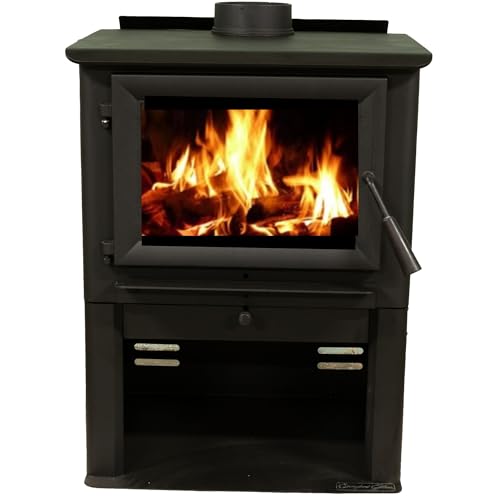
Pros
- High listed heat rating of 112,800 BTU capable of heating spacious areas up to 2,500 square feet.
- Deep firebox accepts 21-inch firewood logs for easier loading and longer burn cycles.
- Rugged build quality utilizing heavy plate steel framing and a solid cast iron door.
- Secondary combustion system delivers a cleaner burn with improved fuel efficiency.
- Expansive front ceramic glass window provides clear firebox visibility.
Cons
- Chimney pipe diameter and specific hearth clearance requirements must be verified in the manual before installation.
- Substantial dimensions and solid steel construction require multiple people and proper equipment to transport and set in place.
- Does not include an ash pan or circulation blower in the standard product data.
The Comfort Glow CGWS2500 is a freestanding indoor wood-burning stove designed for high-capacity heating in spacious residences, rural properties, or detached workshops. Built to tackle demanding winter conditions, the stove carries a manufacturer rating of 112,800 BTU and is specified to heat areas up to 2,500 square feet. It is best suited for homeowners who want a primary or powerful supplemental heat source that uses cost-effective cordwood.
Capacity and combustion performance are central highlights of this unit. The firebox accepts firewood logs up to 21 inches long, which is a major convenience compared to compact wood stoves that require 16-inch cuts. To maximize thermal output, the stove incorporates secondary combustion technology. By introducing preheated air across the top of the firebox, the unit re-burns smoke and volatile gases before they exit, which helps generate additional heat while keeping flue emissions lower.
Structural durability relies on a combination of heavy-duty plate steel for the primary cabinet and a heavy cast iron front door. Cast iron holds up exceptionally well against recurring heat stress and warping, ensuring the door maintains a tight closure over time. A large clear-view glass window in the door panel provides an unobstructed view of the flames, adding the visual comfort of a traditional hearth to the room.
With exterior dimensions of 25.5 inches wide, 27 inches deep, and 31.6 inches high, the CGWS2500 commands a sizable footprint. Planning the installation requires careful attention to non-combustible hearth pad coverage, wall clearance requirements, and proper vertical chimney venting. While the product specifications provide the exterior dimensions, buyers should consult the installation manual for exact flue collar sizing, chimney height minimums, and combustible standoff distances prior to rough-in.
As with any freestanding wood-burning appliance, there are practical considerations to keep in mind. The product data does not list an integrated blower or an under-firebox ash removal pan, meaning ash management must be handled directly from the firebox with a shovel and bucket. Additionally, moving a heavy steel and cast iron stove into place requires proper lifting equipment and adequate help.
For homeowners and cabin owners needing serious heating capability without constant wood-cutting maintenance, the Comfort Glow CGWS2500 provides a well-built, high-output option. Its generous 21-inch log capacity, secondary burn design, and solid iron door make it a dependable workhorse for cold climates.
Rated at 112,800 BTU, this wood-burning stove is engineered for substantial heat generation. The manufacturer lists heating coverage for up to 2,500 square feet, making it suitable for open-concept floor plans, whole-cabin heating, or large workshops. Actual heating performance will vary based on home insulation, ceiling height, climate zone, and the moisture content of the firewood used.
The inclusion of secondary combustion technology is a key operational asset. Rather than letting unburned gases escape up the chimney, secondary burn tubes inject heated air into the upper chamber to ignite particulates. This process extracts more usable heat from every log, helps maintain cleaner flue pathways, and reduces smoke output.
The Comfort Glow CGWS2500 measures 25.5 inches in width, 27 inches in depth, and 31.6 inches in height. These dimensions allow it to accommodate generous 21-inch logs while maintaining a manageable footprint on an approved hearth pad.
Because wood stoves generate significant radiant heat, all installations must adhere strictly to local building codes and manufacturer-mandated clearances to combustible walls. Buyers should verify their chimney connector pipe diameter and ensure a certified floor protector is in place before setting the unit.

Pros
- Solid iron pipe construction withstands high firebox temperatures and falling embers
- Convertible straight or 90-degree inlet fits versatile fireplace pipe layouts
- Adjustable air-gas shutter allows fine-tuning for a clean, sharp blue flame
- Standard 1/2-inch NPT inlet integrates easily with existing gas supply plumbing
Cons
- Requires an upstream listed gas shutoff valve, which is not included with the kit
- Designed strictly for wood ignition and cannot be used as a continuous decorative flame or heater
- Requires professional installation by a qualified gas technician to ensure code compliance and safety
The Midwest Hearth Natural Gas Log Lighter is a dedicated burner pipe assembly engineered specifically to assist wood-burning fireplace owners in starting natural firewood quickly. Instead of relying on paper, kindling, or chemical fire starters, this burner sits under your fireplace grate to deliver a steady gas flame directly against wood logs. It is designed specifically for homeowners with a plumbed natural gas supply in their masonry or factory-built wood fireplace who want a simpler ignition process.
Ignition performance centers on an adjustable air and fuel mixing chamber located at the pipe inlet. The integrated shutter allows users or installers to fine-tune the intake of combustion air, producing a sharp, clean blue flame that efficiently transfers heat to seasoned logs. The manufacturer clearly states that this component is strictly an ignition tool rather than a decorative gas burner or space heater. Once firewood catches and sustains its own flame, the gas line must be shut off completely and the key removed to a safe location.
Constructed from solid iron pipe with a gray finish, the assembly is built to withstand the demanding conditions and falling coals inside a wood firebox. The assembly measures 19.5 inches in overall length, consisting of a 17-inch ported burner pipe and a 2.5-inch mixer section, with a total weight of approximately two pounds. Connections are threaded for structural integrity, utilizing 3/8-inch threads between the burner pipe and the air mixer, and a standard 1/2-inch NPT inlet for connecting to gas plumbing.
Installation flexibility is aided by the included mixer plug, which allows the assembly to configure into either a straight in-line setup or a 90-degree angled entry depending on where the gas stub enters the firebox. A listed gas shutoff valve is not included with this kit and must be installed upstream by a qualified gas technician prior to operation. Verifying firebox width, grate clearance, and gas line orientation before installation ensures proper placement directly beneath the log grate.
A critical limitation is that this model is factory-configured specifically for natural gas and must not be connected to liquid propane without the proper designated fuel variation. Because it does not come with mounting brackets, supply pipe extensions, or an emergency shutoff valve, buyers must plan for the complete gas line assembly. Additionally, this burner cannot be left burning unattended or used to supplement home heating, as it is engineered exclusively for intermittent fire starting.
For wood-burning fireplace owners looking to utilize an existing firebox gas line to simplify fire lighting, this Midwest Hearth starter pipe provides a sturdy, practical solution. Its convertible inlet layout and adjustable air shutter make it adaptable to most standard fireplace hearths. As long as it is installed with a certified shutoff valve by a qualified professional and operated strictly as an ignition aid, it offers dependable convenience for every wood fire.
This burner assembly is configured exclusively for natural gas (NG) systems and should not be used with liquid propane lines unless the designated LP model is purchased. Fuel compatibility must be verified prior to connection to avoid incomplete combustion or soot buildup.
The unit features a standard 1/2-inch NPT gas inlet that fits standard residential gas pipes, while 3/8-inch threading connects the burner pipe to the mixing body. The included mixer plug allows the gas feed to be oriented either straight into the back or at a 90-degree angle to accommodate various hearth plumbing layouts.
A listed upstream gas shutoff valve is required for safe operation but is not included in this package. Local building codes typically mandate that a qualified gas technician handle the pipe fitting, pressure testing, and final valve placement.
This device is engineered solely as an ignition aid for seasoned firewood and is not certified as a space heater or decorative gas log appliance. Leaving the gas supply open after the fire has started presents serious safety hazards and voids the intended use.
Once the wood fire is fully established, the upstream gas valve must be shut off completely, and the removable key should be stored in a safe, designated location away from children. Always maintain standard wood fireplace clearances, open dampers, and spark protection during operation.
Frequently Asked Questions
How does a radiant wood burning fireplace differ from a circulating model?
Radiant wood burning fireplaces project heat directly outward from the open firebox into the room via infrared thermal radiation. Circulating fireplaces, by contrast, pull cooler room air through built-in convection channels or blowers, warm it around the firebox, and exhaust it back into the living area. While radiant designs deliver intense fireside ambiance and immediate facing warmth, circulating units distribute warm air more evenly throughout larger square footage.
Can you fit an insert into radiant wood burning openings?
Yes, provided the existing firebox depth, width, height, and chimney flue meet the manufacturer specifications for the insert. Products like the Comfort Glow wood insert require adequate internal clearance, a proper stainless-steel chimney liner, and an existing masonry or approved zero-clearance opening. Homeowners with gas setups can also explore compatible replacement parts like hearth bricks and panels, but wood inserts must always match your chimney diameter and combustible mantel clearances.
What accessories improve heat circulation for Heatilator Radiant Wood Burning Fireplaces in 2026?
Heat-powered fans and dedicated circulating blowers provide the most reliable heat distribution. The Tomersun wood stove fan uses a 6-blade thermoelectric design operating between 185°F and 660°F, pushing warm air forward without electrical cords or batteries. For insert units, integrated 100 CFM electric blowers circulate warm air through the convection chamber, preventing heat from getting trapped near the mantel or ceiling.
How does a natural gas log lighter assist in starting wood fires?
A natural gas log lighter serves solely to ignite wood logs quickly without paper kindling. Solid iron pipe kits like the Midwest Hearth lighter connect to a dedicated 1/2-inch NPT gas line beneath the fireplace grate. Once the air shutter is adjusted for a clean blue flame, the gas burns beneath the wood until the fire catches, after which the manual gas valve must be shut off completely.
How do log capacity and firebox size affect wood stove burn times?
Larger firebox dimensions directly determine log length capacity, which dictates how long a fire burns between reloads. Stoves accommodating 18-inch logs heat up to 1,200 square feet with solid overnight burn potential, while larger fireboxes accommodating 21-inch logs support heating areas up to 2,500 square feet. Firebrick lining and secondary combustion tubes further extend burn efficiency by retaining heat and burning exhaust gases.



Write Your Review
No reviews yet. Be the first to share your experience!