


Cracked firebricks and deteriorating mortar joints expose firebox framing to dangerous heat levels during regular wood or coal burning sessions. Selecting the appropriate rutland fireplace mortar restores structural stability to firebox walls, flue tiles, and masonry joints before thermal degradation worsens. Refractory mortars differ significantly from conventional construction cement because they withstand direct flame exposure and extreme temperatures reaching up to 2,000°F without spalling or crumbling under stress.
Homeowners often patch firebrick joints only to watch improper sealants blister and pop loose after lighting a fire. Pre-mixed silicate cartridges offer convenient, clean application for narrow joint re-pointing, whereas dry refractory mixes handle larger brick bedding and firebox parging. While metal zero-clearance units and electric fireplace inserts rely on steel framing, traditional masonry hearths depend entirely on heat-cured bonds that withstand thermal expansion. Matching the mortar formula to your specific joint depth ensures dependable hearth protection through demanding winters.

Pros
- Resists intense thermal exposure up to 2,000°F in direct firebox combustion zones
- Convenient 10.3 oz cartridge fits standard consumer caulking guns for precise application
- Versatile bonding across firebrick, refractory panels, and masonry joints
- Durable gray cured finish matches typical fireplace and stove refractory masonry
Cons
- Requires proper air drying and a gradual heat cure before building full-intensity fires
- Rigid cured formula is not designed for moving metal joints or flexible expansion seams
- Single 10.3 oz tube is sized for spot repairs and crack filling rather than large-scale rebuilds
Rutland High-Heat Fireplace Mortar is a dedicated refractory cement engineered specifically for repairing masonry cracks, re-pointing eroded seams, and setting firebricks inside solid-fuel heating appliances. Fireplace owners, wood-stove operators, and remodelers facing deteriorating mortar joints will find this compound tailored for restoring structural boundaries in high-heat zones. It provides an accessible, DIY-friendly method for maintaining safety and preventing heat migration into surrounding structural framing.
Thermal resilience stands as the core functional advantage of this formulation. The manufacturer rates this mortar to withstand operating temperatures up to 2,000°F, allowing it to perform under direct flame contact within fireboxes, stove interiors, and small forge linings where conventional Portland-based mortars quickly degrade. Once cured, the compound sets into a rigid, rock-hard seal that blocks hot embers and gases from escaping through cracked refractory panels or failing joint lines.
Packaged in a convenient 10.3-ounce cartridge measuring 1.875 by 1.875 by 11.25 inches with a total weight of 1.2 pounds, the mortar operates seamlessly with standard household caulking guns. This dispensing format offers superior precision over trowel-applied tubs when injecting material deep into narrow hairline fractures, panel joints, and recessed gaps. The gray color provides an unobtrusive, factory-like appearance that visually integrates with standard refractory bricks and pre-cast fireplace panels.
Proper surface preparation and curing steps dictate long-term adhesion. Applying this mortar requires removing loose soot, ash, and failing masonry remnants, followed by lightly pre-dampening the application area to prevent premature moisture loss. Users must allow adequate air-drying time before initiating a modest break-in fire to heat-set the cement, ensuring the patch achieves maximum hardness without blistering.
Buyers should account for application limits before purchase. Because this refractory mortar cures completely rigid, it cannot function as an elastic seal on expanding metal collars or joints subject to significant mechanical movement. In addition, while a 10.3-ounce tube easily accommodates routine joint touch-ups and localized crack repair, extensive masonry rebuilds or full firebox relining projects will necessitate multiple tubes.
For homeowners and maintenance-minded hearth owners seeking an American-made, high-heat bonding solution, Rutland Fireplace Mortar offers dependable performance and straightforward dispensing. It is a cost-effective, practical necessity for seasonal hearth checkups, keeping fireboxes structurally sound and ready for active burning seasons.
Routine fireplace maintenance requires regular inspection of firebox walls, panel seams, and floor firebricks during pre-season sweeps and ash cleanups. Hairline cracks and crumbling joint lines allow heat to transfer toward backing structures, making early intervention with high-heat refractory mortar an important preventive measure.
Before dispensing Rutland Fireplace Mortar, thoroughly clean out damaged joints using a wire brush or ash vacuum to clear away loose grit, creosote, and crumbling mortar. Lightly misting the masonry with water prior to caulking helps improve chemical bonding, while following the manufacturer's heat-curing recommendations ensures a long-lasting, heat-resilient repair.
Manufactured in the United States by Rutland Products, a hearth-care company founded in Vermont in 1883, this refractory mortar reflects over a century of specialized thermal formulation. Its dense refractory binder is chemically structured to maintain tensile cohesion and crack resistance when subjected to thermal cycling up to 2,000°F.
The 10.3-ounce cartridge construction features durable walling capable of handling firm caulking-gun push rod pressure without rupture or leakage around the nozzle base. Its neutral gray coloration cures to an authentic refractory finish that visually matches traditional firebrick seams across residential fireplaces and stoves.
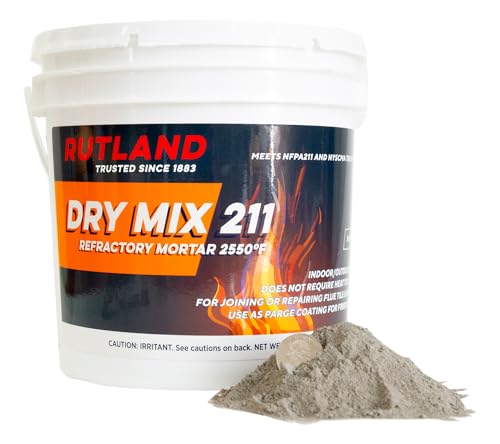
Pros
- Versatile use as both a structural joint mortar and a protective firebox parge coating
- Broad compatibility across wood, gas, pellet, and coal heating installations
- Dry formula lets you mix only the required amount for small spot repairs
- Dark gray color matches aged masonry and hides soot accumulation
- Made in the USA by an established hearth maintenance brand
Cons
- Requires manual measuring and mixing with water compared to ready-to-use tub pastes
- Container volume is sized for localized repairs rather than full-scale chimney builds
- Requires complete curing and clean surface preparation before firing the appliance
Rutland Dry Mix 211 Refractory Mortar is a specialized high-temperature cement mix engineered for patching fireboxes, resetting loose firebricks, and joining flue tiles. It best suits homeowners, wood stove owners, and fireplace remodelers looking to address degraded mortar joints or protect eroded brickwork without hiring a full masonry crew for minor maintenance tasks.
In terms of practical hearth function, this mortar performs double duty as both an adhesive joint compound and an over-coat parge layer. When troweled into masonry flue joints, it seals gaps to maintain proper draft integrity and contain exhaust gases in wood, gas, coal, or pellet installations. When thinned slightly for parging, it can be skimmed across the inner firebox walls to shield crumbling brick from open flame exposure and thermal shock.
The build composition consists of dry refractory cement materials formulated to air-cure into a durable, heat-resistant barrier. The resulting cured material features a dark gray finish that blends naturally into charcoal-stained firebox interiors and dark flue liners, preventing the glaring white or light-tan appearance associated with standard construction cements. Because it is manufactured in the USA, it provides consistent consistency and aggregate grading batch to batch.
Application and preparation are straightforward for standard home maintenance projects. Users measure the required amount of dry mix into a bucket, add clean water progressively, and mix to a stiff, workable trowel consistency before working it firmly into pre-dampened joints. The packaged format measures approximately 8 x 8 x 7.75 inches, giving DIYers a manageable footprint for hearthside work while leaving enough material for multiple small patching sessions.
Realistic limitations center on project scale and surface prep requirements. The container capacity is geared toward spot repairs, flue joints, and targeted parging rather than laying complete masonry chimney stacks. Additionally, proper bonding requires users to thoroughly scrape away old soot, loose refractory dust, and creosote before troweling, as any lingering residue can compromise long-term adhesion.
For homeowners facing crumbling mortar lines, loose firebrick, or unsealed flue tiles, Rutland 211 Dry Mix Refractory Mortar provides a reliable and cost-effective maintenance fix. Its multi-fuel compatibility, straightforward water-mix formula, and discrete dark gray finish make it an essential repair compound for prolonging the service life of masonry fireplaces and stoves.
Rutland 211 is supplied as a dry mix powder that requires only clean water before application. Users should mix small, workable batches in a clean container to avoid premature drying during troweling.
For optimal bonding, all firebrick and flue tile surfaces should be cleaned of loose mortar, ash, soot, and grease, and lightly dampened with water immediately before applying the mortar compound.
The product acts effectively as a joint binder or as a thin parge skim coat over firebox masonry to restore eroded brick faces and enhance flue safety.
This refractory mortar is rated for use across multiple solid and gas fuel appliances, including traditional wood-burning fireplaces, gas log fireboxes, and pellet or coal stove chimney connections.
It is specifically engineered for masonry flue tile joining, firebrick repair, and firebox wall resurfacing where standard building mortars cannot tolerate operating temperatures.
Always verify local building code requirements and ensure the mortar has fully air-cured according to product instructions before subjecting it to operational fire heat.

Pros
- High heat resistance rated up to 2,000°F for direct contact in fireboxes, wood stoves, and forges
- Standard 10.3 oz cartridge format allows controlled application into narrow joints and cracks
- Buff finish matches standard light refractory brick and paneling better than dark cements
- Durable bond cures hard across firebrick and masonry surfaces
Cons
- Standard 10.3 oz tube size is intended for targeted crack and joint repairs rather than large-scale brick rebuilding
- Requires proper surface preparation and heat curing as specified by refractory cement guidelines to achieve maximum hardness
Rutland Buff Fireplace Mortar is a specialized refractory cement engineered for repairing damaged firebrick, repointing mortar joints, and sealing cracks in high-heat heating appliances. Homeowners with wood-burning fireplaces, wood stoves, forges, or pre-cast refractory firebox panels can use this product to maintain hearth integrity without hiring a full masonry crew for minor cosmetic and joint fixes.
High-temperature resilience is the primary functional advantage of this mortar, carrying a manufacturer rating of up to 2,000°F. In solid-fuel environments like wood-burning fireplaces and stoves, internal temperatures easily degrade standard construction mortars, leading to crumbling seams and compromised firebox containment. This refractory formula cures hard to establish a rigid bond between masonry components, keeping firebricks anchored and seam lines tightly sealed against direct flame and ember exposure.
Packaging comes in a standard 10.3 oz caulking tube measuring approximately 1.88 by 1.88 by 11.25 inches and weighing 1.3 pounds. This delivery method provides clean, directed dispensing directly into narrow cracks and recessed joint lines where troweling loose paste can be messy or imprecise. The buff color is specifically tailored to match common tan and light-colored refractory firebricks, offering a clean, uniform cosmetic appearance that blends in far better than black or dark gray cements.
Successful maintenance with refractory cement typically requires thorough pre-application cleaning to remove loose ash, soot, and crumbling debris from the target cracks. Because this mortar is packaged for cartridge dispensing, users can apply a steady bead directly into cleaned seams before smoothing or jointing. As with most refractory materials, allowing proper air drying and following manufacturer curing recommendations during initial small fires ensures the material reaches its full 2,000°F thermal resistance without bubbling or spalling.
While this 10.3 oz cartridge is ideal for sealing cracks and spot-pointing eroded joints, it is not sized for laying entire fireboxes or rebuilding complete masonry fireplaces. Buyers should assess the overall depth and extent of damage; wide structural gaps, displaced structural masonry, or crumbling exterior chimney walls may require professional masonry rebuilding rather than surface caulking. Additionally, buyers should verify whether their existing firebrick requires a buff, black, or gray tone to ensure an aesthetically pleasing match.
For DIY-minded homeowners and wood stove operators looking to extend the service life of their firebox masonry, Rutland Buff Fireplace Mortar provides a dependable, high-temperature bonding solution from a long-standing American brand. Its 2,000°F rating, convenient tube packaging, and natural buff tone make it a practical maintenance investment for keeping hearth surfaces sealed, neat, and protected through active burning seasons.
Rutland Fireplace Mortar is formulated for direct repair of joints, cracks, and firebrick seams in wood stoves, fireboxes, and chimney assemblies. To achieve optimal bonding, thoroughly clean out any loose soot, creosote, and broken mortar before application.
Dispense the mortar smoothly into joints using a standard cartridge gun. For maximum durability, allow the repair to air-cure according to package directions before gradually exposing it to low heat, ensuring the cement hardens completely without trapping moisture.
This refractory mortar is rated to withstand temperatures up to 2,000°F, making it suitable for high-heat environments including wood-burning fireboxes, wood stoves, refractory firebox panels, and blacksmithing forges.
The buff color is specifically formulated to complement tan, cream, and standard light refractory firebricks. For dark cast iron stoves or charcoal-colored fireboxes, verify whether buff or an alternate color such as black or gray provides the preferred visual match.

Pros
- High 2000°F heat rating handles intense interior firebox environments safely
- Pre-mixed cartridge format fits standard caulking guns for controlled, targeted application
- Extensive coverage of up to 99 feet per tube with a 1/8-inch bead
- Two-pack provides ample material for multi-joint re-pointing and future upkeep
Cons
- Formulated strictly for interior firebox use and not suitable for exterior masonry
- Requires heat to achieve a full cure, necessitating a planned fire according to directions
- Designed for joint pointing and firebrick bonding rather than large structural rebuilding
The Rutland Fireplace Mortar Cartridge 63G 2-Pack in gray is a dedicated refractory compound designed specifically for maintaining and repairing interior masonry fireboxes. Fireplace owners, remodelers, and property managers often discover minor chips, cracked firebricks, or eroding mortar lines during seasonal inspections. This pre-mixed formulation targets those exact problem areas by providing a resilient, heat-resistant seal between refractory bricks without requiring heavy masonry tools or bulk cement mixing.
Thermal resilience is the core functional advantage of this compound, boasting a manufacturer rating of up to 2000 degrees Fahrenheit (1090 degrees Celsius). Standard household caulk or typical Portland-based mortar cannot withstand direct exposure to open fires and will quickly crumble or release fumes under intense heat. Rutland specifically engineered this mortar to endure severe hearth temperatures, ensuring that sealed joints and bonded firebricks remain intact throughout the burning season.
Each cartridge contains 10.3 ounces of mortar and measures 1.875 by 1.875 by 11.25 inches, fitting neatly into standard caulking guns. This dispensing style makes targeting narrow joints and recessed crevices significantly easier than traditional trowel-applied compounds. According to manufacturer specifications, a single tube provides approximately 99 linear feet of coverage using a 1/8-inch bead, making this two-pack more than sufficient for extensive re-pointing projects or bonding several loose refractory bricks.
Successful application requires thorough surface preparation and proper curing. All soot, loose ash, crumbling mortar, and debris should be completely brushed or vacuumed away from the target area before dispensing. Once the mortar is applied and smoothed into the joints, it requires heat to properly cure and achieve its full structural hardness. Users should allow the initial application to dry before gradually firing the hearth to complete the chemical bond as outlined in the product instructions.
Realistic limitations must be kept in mind prior to purchase. This mortar is explicitly formulated for interior firebox use and should not be used on exterior chimneys, outdoor fire pits exposed to rain, or large open voids where structural concrete is required. It is also limited to small chip patching, firebrick bonding, and standard joint pointing rather than rebuilding collapsed masonry walls.
For homeowners and wood-burning fireplace owners seeking a tidy, highly heat-resistant way to repair damaged mortar joints and secure loose firebricks, this two-pack from Rutland delivers exceptional practical value. Its balance of high thermal tolerance, ready-to-use packaging, and generous coverage makes seasonal firebox upkeep straightforward and reliable.
Application of the Rutland 63G mortar relies on a standard caulk gun applicator, which allows clean delivery directly into joint gaps. The 10.3-ounce cartridge dimensions match standard household caulking frames, eliminating the need for specialized trade equipment.
The compound provides approximately 99 feet of coverage per tube based on a 1/8-inch bead, giving the two-pack nearly 200 feet of total bead length. This extensive yield accommodates multi-seam tuck-pointing and multiple chipped brick fixes in a single purchase.
Unlike air-curing sealants, this refractory mortar requires heat exposure to complete its hardening process. Applying low, gradual heat after an initial drying phase ensures the compound sets correctly without bubbling, blistering, or losing adhesion along the firebrick edges.
Routine maintenance of firebox mortar joints is a vital part of hearth safety. Degraded or cracked joints can allow excessive heat to transfer toward surrounding structural framing or underlying masonry layers, making prompt repairs essential.
With a continuous heat tolerance rated up to 2000°F (1090°C), this compound is built to withstand direct wood fire and glowing embers. Its stable composition avoids the cracking and flaking common to non-refractory repair materials.
Users must verify that all repair work remains within the interior firebox space. Because this product is designated strictly for interior use, exterior chimney crowns, exposed flues, and outdoor installations require weather-resistant exterior refractory products instead.

Pros
- Convenient 2.5-pound size prevents waste during small joint touch-ups and patch repairs
- Broad application across wood, gas, pellet, and coal heating appliances as well as forges and furnaces
- Dry mix formula allows custom batching so leftover dry powder can be stored for future use
- Neutral dark gray color matches traditional weathered refractory brick and mortar lines
- Made in the USA for dependable hearth maintenance and repairs
Cons
- Requires manual mixing with clean water rather than coming pre-mixed and ready to trowel
- Small 2.5-pound volume is strictly suited for minor patches rather than extensive firebox rebuilding
- Specific water ratios and heat-curing procedures must be verified on the packaging before firing
Rutland Dry Mix 211 Refractory Mortar is a specialized high-temperature cement mix engineered for repairing firebrick, setting masonry flue tiles, and patching damaged seams inside residential heating systems. It best suits existing-fireplace owners, wood-stove operators, and DIY remodelers who need to address chipped joints, loose firebricks, or weathered chimney flue tiles without purchasing commercial-scale bags of mortar.
According to manufacturer specifications, this dry mortar is formulated for use in gas or wood fireplaces, wood stoves, coal stoves, pellet stove chimneys, furnaces, and forges. Because combustion chambers undergo intense thermal expansion and contraction, standard construction mortars will quickly crack and crumble; this refractory formula is structured to maintain strong joint adhesion in high-heat zones. Its 2.5-pound dry weight offers enough compound to re-point several critical firebox joints or secure cracked mortar seams across the firebox floor and walls.
The mortar mixes into a dark gray compound that blends neatly with standard industrial refractory brick and aged charcoal firebox walls. Being a dry mix, it provides a longer shelf life in its unmixed state compared to pre-mixed tub pastes that can dry out or skin over in the container between heating seasons. Manufactured in the USA, the product gives homeowners a dependable material to maintain fire-containment areas exposed to direct flame and flue exhaust.
Applying this refractory cement requires proper surface preparation, including removing loose ash, soot, and failing mortar before troweling. Users must mix the dry powder with clean water to a workable paste consistency following product packaging instructions, working the compound firmly into open brick joints or tile seams. Because it comes in dry form, homeowners can mix just the required quantity for a specific spot repair, keeping the remaining dry powder sealed in a dry location for upcoming seasonal maintenance.
A practical limitation of this 2.5-pound container is its capacity, which is tailored for localized maintenance rather than relining an entire chimney or building a complete firebox from the ground up. In addition, users should review package instructions regarding exact water-to-powder ratios, working times, and whether an initial low-fire cure is required before exposing the repair to intense heat, as proper curing is essential to prevent moisture entrapment and flaking.
For homeowners and stove owners looking for an affordable, high-heat masonry patch to keep fireboxes and flue tiles structurally sound, Rutland Dry Mix 211 offers targeted utility. It delivers reliable high-temperature holding power for minor wood stove, chimney, and fireplace upkeep without the clutter and expense of large industrial masonry supplies.
Rutland Dry Mix 211 Refractory Mortar is engineered specifically for joining and repairing firebrick and masonry flue tiles across multiple heating configurations. The manufacturer lists compatibility with gas fireplaces, wood-burning fireplaces, wood stoves, pellet stoves, coal stoves, furnaces, forges, and chimney flue assemblies.
Substrate preparation is critical before application. The work area should be thoroughly cleaned of loose mortar, ash, soot, and debris so the mortar can adhere directly to solid masonry. Buyers should verify the exact water mixing ratios and working time on the product label prior to beginning their repair project.
Rutland Dry Mix 211 is formulated in the USA using refractory cement compounds designed to withstand thermal cycling inside solid-fuel and gas appliances. Its high-heat composition resists the thermal degradation that causes standard masonry mixes to fail under direct flame exposure.
The dry mix packaging ensures that unmixed mortar can be preserved for future patch jobs, avoiding the premature hardening common with pre-mixed wet pastes. When cured, its dark gray color provides a clean, neutral finish that integrates smoothly into aged firebox masonry.

Pros
- Non-combustible silicate cement formula meets ASTM E136 fireblock specifications.
- Convenient 10 oz cartridge dispenses easily using standard caulk guns for precise joint repointing.
- Cleans up with basic tap water before firing, keeping work areas tidy.
- Blends well into dark firebox interiors and accepts paint after heat curing.
Cons
- Requires a heat cure (firing) to reach full rock-hard rigidity.
- Best suited for small chips, joint repointing, and minor patches rather than major structural firebox rebuilds.
- Requires a standard caulking gun, which is sold separately.
DAP High Heat Fire Resistant Mortar is a specialized 10-ounce silicate cement compound engineered for patching damaged firebrick and sealing masonry joints in wood-burning stoves, traditional masonry fireplaces, and wood-frame assemblies. Homeowners and DIYers facing crumbling mortar lines or chipped firebox walls will appreciate its straightforward cartridge format, which allows for direct dispensing into tight gaps without mixing messy powdered mortars.
Functionally, this black silicate formula acts as both a refractory repair mortar and an ASTM E136-rated non-combustible fireblock sealant. It serves to secure loose bricks, fill voids where smoke or embers could compromise masonry integrity, and halt draft paths. Once in place and subjected to firebox heat, the compound undergoes a curing process that sets it rock hard, creating a durable barrier against drafts and combustion byproducts.
The mortar is packaged as a ready-to-use black paste weighing approximately 0.63 pounds, making it easy to handle in confined firebox spaces. Its dark coloration blends naturally with cast-iron stove linings and carbon-stained brick interiors, minimizing visible repair marks. In addition, the material is paintable once fully heat cured, allowing remodelers to match custom fireplace aesthetic treatments if necessary.
Application is straightforward using any standard 10-ounce caulking gun. Because the uncured formula is water-soluble, cleanup of tools, stray smears, and surrounding hearth areas requires only a damp cloth and warm water before the product dries. The low-odor formulation ensures comfortable interior use in living rooms or basements without the pungent chemical fumes common to solvent-based sealants.
While highly effective for localized maintenance, this sealant is designed primarily for minor chips, crack repairs, and joint repointing rather than large-scale structural rebuilds of collapsed brickwork. Buyers should note that full hardness depends on heat curing through subsequent fireplace operation. Additionally, users must verify local building codes regarding firestopping requirements and ensure application surfaces are thoroughly swept clean of loose ash and soot prior to sealing.
For routine hearth maintenance, wood stove tune-ups, and minor firebox tuckpointing, DAP High Heat Fire Resistant Mortar offers exceptional practical value. It eliminates the hassle of blending mortar batches for small repairs while delivering reliable, non-combustible sealing performance.
Surface preparation is essential before applying this mortar; always brush away loose ash, soot, and crumbling debris from firebrick joints to achieve proper adhesion.
Uncured mortar cleans up easily using a damp sponge and clean water, but excess material should be wiped away immediately before the compound dries or cures under heat.
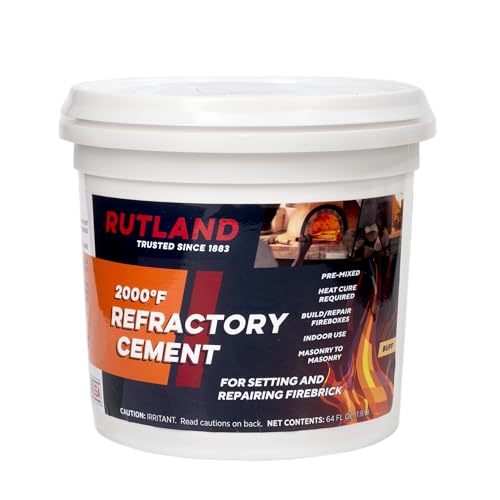
Pros
- Ready-to-use pre-mixed formulation saves preparation time with no water or additives needed
- High thermal threshold rated up to 2000 degrees Fahrenheit for demanding firebox environments
- Smooth paste consistency adheres easily between refractory bricks and along minor firebox cracks
- Buff tone provides an aesthetically cohesive match for traditional indoor firebrick joints
Cons
- Strictly restricted to indoor masonry applications and cannot be used outdoors
- Requires an intentional 500-degree Fahrenheit heat cure to achieve full hardness
- Designed primarily for small gaps and joint repairs rather than rebuilding large structural sections
Rutland 64 oz Refractory Cement is a specialized high-temperature masonry mortar crafted specifically for repairing firebrick joints, patching minor cracks, and resetting loose bricks in indoor fireboxes. It is tailored for wood-burning fireplace owners, wood stove users, and kiln operators who need a convenient repair compound without mixing dry mortar powder from scratch. By coming pre-mixed in a half-gallon tub, this cement simplifies routine hearth maintenance for homeowners looking to maintain their firebox walls.
Thermal endurance stands as the primary technical specification for this refractory cement, carrying an operating rating up to 2000 degrees Fahrenheit (1090 degrees Celsius). To transition from its wet paste state to its full bonded strength, the compound requires a heat-curing process at a minimum of 500 degrees Fahrenheit. This curing temperature ensures the mortar achieves its rated structural density, making it suitable for exposure to direct flames and intense wood-burning heat cycles once cured properly.
In terms of consistency, the mortar features a thick, smooth paste texture that sticks readily to porous masonry surfaces. The buff coloration allows it to integrate cleanly into standard firebrick arrays, helping repairs look uniform rather than leaving dark, distracting patch marks across the firebox interior. Its cohesive body holds in place between firebrick joints without immediately slumping, which helps users apply neat, controlled mortar lines.
Application is straightforward since no water ratios or dry-mixing paddles are necessary. Packaged in a compact 6.25 x 6.25 x 6.25-inch container weighing roughly 7.6 pounds, the half-gallon volume is well-sized for seasonal repointing, crack filling, and setting replacement bricks. Before application, users should clear soot, dust, and loose mortar from the targeted area to ensure proper mechanical adhesion between the brick and the compound.
Certain operational limitations must be observed. This refractory cement is explicitly formulated for interior applications and should not be used on exterior fire pits or outdoor chimneys where weather exposure occurs. Furthermore, because a minimum 500-degree heat cure is required to finalize the hardening process, users must be prepared to run an appropriate initial burn to cure the patch. It is engineered for filling small gaps and mortar lines rather than casting large structural sections or rebuilding missing wall sections.
For homeowners and wood stove operators facing crumbling firebrick joints or minor firebox gaps, Rutland Refractory Cement provides a dependable, high-heat solution. Its ready-to-use format, 2000-degree thermal rating, and natural buff finish make it a sensible choice for keeping indoor wood-burning appliances in safe operating order.
Surface preparation is crucial before applying Rutland Refractory Cement. The interior masonry surfaces should be thoroughly brushed and cleared of loose ash, soot, and failing mortar dust so the wet paste can achieve direct contact with the solid firebrick.
Once applied and shaped into the joint or crack, the product requires a steady heat cure reaching at least 500 degrees Fahrenheit to lock in its permanent bond. Building a controlled fire to gradually bring the firebox up to temperature helps drive off remaining moisture without causing bubbling or steam-induced weakness.
Store any unused mortar tightly sealed in its original container at moderate indoor temperatures to prevent the mixture from drying out between seasonal inspections. Always ensure the lid is fully seated around all edges to prolong shelf life for future touch-ups.
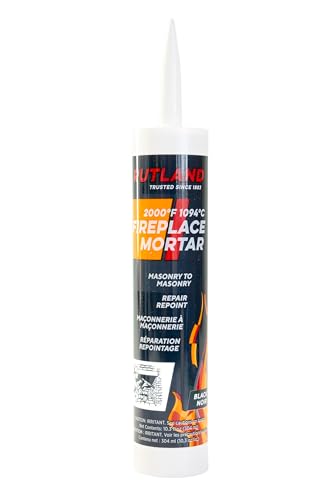
Pros
- High temperature threshold rated up to 2,000°F resists degradation under intense fires
- Multi-purpose bonding on firebrick, masonry, and cast iron stove seams
- Cartridge dimensions of 1.88 x 1.88 x 11.25 inches allow easy handling in tight spaces
- Black coloration provides a clean, uniform look in dark firebox interiors
Cons
- Black color may stand out visibly against light gray or buff firebrick
- 10.3 oz tube capacity is limited to spot repairs and joint sealing rather than large rebuilding jobs
- Requires proper heat curing following manufacturer application guidelines before full firing
Rutland Fireplace Mortar is a specialized black refractory cement engineered for wood stove users, fireplace owners, and DIYers who need to repair compromised firebox linings. Over regular burn cycles, extreme thermal expansion causes mortar between firebricks to crack, flake, and crumble. This formula provides an accessible, spot-repair solution designed to secure loose firebricks and seal fractures before heat damages surrounding structural materials.
Thermal endurance is the defining specification of this compound, carrying a manufacturer-listed rating up to 2,000°F. Ordinary construction mortars and standard caulk break down quickly under direct flame exposure. By contrast, this refractory cement cures into a hard, dense masonry bond that withstands continuous high-heat environments inside wood stoves, fireboxes, and residential forge setups.
The physical delivery format consists of a 10.3 oz cartridge measuring 1.88 by 1.88 by 11.25 inches with a total weight of roughly 0.64 pounds. Packaged for targeted dispensing, the tube allows users to guide mortar directly into narrow gaps, hairline fissures, and mortar joints without the mess or inconsistency of hand-mixing small batches of dry refractory powder.
Color selection plays a key aesthetic role in hearth maintenance, and this specific formula comes in black (Color 63). The dark tone matches well with cast iron stove panels, coal stoves, and existing dark firebox walls where soot accumulation makes standard gray mortar look out of place. It functions equally well for re-pointing seams between bricks or sealing air gaps along stove joints.
Buyers should recognize the scope limitations inherent to a 10.3 oz cartridge. While ideal for patching several linear feet of cracked joints or resetting a few loose firebricks, larger restoration projects involving complete firebox rebuilds will require multiple tubes or bulk pail cement. Additionally, users with light tan or cream-colored refractory brick may prefer gray mortar to maintain uniform joint appearance.
For homeowners and wood stove operators preparing their hearth for heating season, Rutland Black Fireplace Mortar is a cost-effective and dependable maintenance supply. Its 2,000°F rating, robust bonding strength, and convenient cartridge application make it an excellent choice for keeping firebox brickwork safe and functional.
Before applying Rutland Fireplace Mortar, ensure the repair area is completely cool, clean, and free of loose ash, soot, dirt, or crumbling mortar fragments. Brushing the joint with a stiff wire brush and lightly dampening the porous masonry surface helps promote a strong, lasting bond.
Cut the cartridge tip to match the width of the crack or joint needing repair. Gun the mortar smoothly into the void, pressing it firmly into the joint with a pointing trowel or putty knife to eliminate air pockets, then strike the joint clean along the brick face.
Allow the mortar to air dry for the duration recommended by the manufacturer prior to lighting a fire. Initial fires should be kept low and gentle to permit gradual heat curing, preventing steam buildup within the fresh cement that could lead to blistering or surface cracking.
Frequently Asked Questions
Does rutland fireplace mortar require heat to cure?
Yes, pre-mixed refractory mortars require a heat cure to achieve full compressive hardness. While the cement air-dries firm within hours, it requires heat exposure, typically starting around 500°F, to set rock-hard. Building a small, gentle fire initially prevents trapped moisture from blistering the fresh joint lines.
What is the maximum temperature rating for Rutland refractory cement?
Rutland refractory mortar is rated to withstand temperatures up to 2,000°F (1,090°C). This high-heat tolerance makes it suitable for direct flame contact in wood-burning fireboxes, stoves, and chimney flues. While modern minimalist fireplaces often use factory refractory panels, open masonry hearths rely on this thermal rating for long-term firebox safety.
Can you use standard Rutland fireplace mortar outdoors?
No, standard Rutland fireplace mortar cartridges and pre-mixed pastes are formulated for interior masonry repairs only. Soluble silicate formulas dissolve when exposed to continuous rain, groundwater, or exterior freeze-thaw cycles. Exterior chimney crowns and open-air fire pits require specialized hydraulic refractory mortar engineered for weather resistance.
How thick should mortar joints be when re-pointing firebricks?
Refractory mortar joints perform best when applied at a thickness of 1/8 inch to 1/4 inch. Applying pre-mixed silicate cement in thick layers increases the risk of shrinkage cracks and uneven curing. For wider gaps or rebuilding structural walls, dry mix refractory mortar mixed with water provides better slump control.
Can refractory mortar be used near gas fireplace components in 2026?
Yes, refractory mortar can seal background masonry cracks in gas fireboxes once fully cured. However, mortar must never coat burner ports, pilot assemblies, or gas supply lines. When servicing hearths with an hpc linear fireplace burner, keep all high-heat cements strictly confined to surrounding masonry bricks.



Write Your Review
No reviews yet. Be the first to share your experience!